Is Your Home Lighting Triggering Daily Headaches?

Image Credit: Unsplash
Light at home can contribute to recurring headaches, especially when bright fixtures, exposed bulbs and reflective surfaces stay in your field of vision for hours. The effect may become noticeable after a renovation, a switch to brighter LED bulbs or a change in where you work during the day.
Lighting is only one possible factor, so frequent or severe headaches deserve medical attention. Still, a few practical observations and adjustments can reveal whether your home’s lighting is making symptoms worse.
The Rise of High-Lumen Recessed LEDs
Recessed LEDs have become a favorite in modern interiors because they look clean, save ceiling space and provide strong illumination. Problems can arise when a room has too many fixtures or each bulb produces more light than the space requires. A kitchen with eight bright downlights, for example, may feel comfortable while you prepare dinner but overwhelming when you sit at the island with every fixture shining into your peripheral vision.
Lumens describe how much visible light a source produces. A bulb that generates 1,100 lumens will usually appear much brighter than one rated at 450 lumens, although room size, wall color and fixture placement affect the result. Bright white walls, polished counters and glossy cabinets can bounce that light around the room. That reflected glare may be nearly as uncomfortable as looking toward an exposed bulb.
Color temperature matters too. LEDs around 2700K produce a warm appearance, while 4000K and 5000K options look cooler and can feel more intense. Cooler light isn’t automatically harmful, but some people find it uncomfortable during long periods indoors. Reports of office lighting warning signs also show how glare, flicker and poor contrast may contribute to eye fatigue in spaces used for focused work.
Try using only half your recessed lights for several evenings. If discomfort eases, install dimmers compatible with your specific LED bulbs or replace selected bulbs with lower-lumen versions. Compatibility matters because an unsuitable dimmer may cause buzzing, visible flicker or uneven performance.
Understanding Visual Strain and Photophobia
Visual strain often feels like tired, dry or aching eyes after sustained focus. It may come with blurred vision, difficulty shifting focus and discomfort around the forehead. Screen use, an outdated prescription, dry air and close-up work can all contribute, so lighting may be one part of a wider pattern.
Photophobia is different. It refers to light sensitivity and can occur with migraine, certain eye conditions, concussion and other medical issues. During an episode, ordinary indoor lighting may feel painfully bright. The connection between migraine and photophobia helps explain why someone may seek a dark room even when everyone else finds the space comfortably lit.
Pay attention to timing and location. A headache that appears after two hours at a desk under a ceiling spotlight offers a useful clue. So does discomfort that fades after moving to a softly lit room. Keep a simple record for one or two weeks, noting the room, time, fixtures in use, screen activity and symptom intensity from 1 to 10. Patterns are more useful than a single uncomfortable afternoon.
Temporary personal barriers can help while you adjust the room. Some people who experience migraine or photophobia consider light-filtering glasses for light sensitivity, which use specialized lenses designed to filter selected light wavelengths. This option may suit situations where you can’t control every fixture, such as a shared household or rented home.
New or worsening sensitivity still needs proper assessment. Seek prompt medical care if a headache is sudden and severe or appears with confusion, weakness, fever, fainting, vision loss or a recent head injury. An eye care professional can also check for prescription changes, eye surface problems and other possible causes.
Personal Barriers Against Harsh Glare
Start by changing what sits directly in your line of sight. A bare bulb above the dining table, a downlight over your monitor or a bright window reflected in a television can create persistent glare even when the room’s overall brightness seems reasonable. Move your chair, rotate the desk or tilt the screen until the light source disappears from view.
Window treatments offer flexible control during the day. Sheer curtains soften direct sunlight while preserving a bright atmosphere, and adjustable blinds let you redirect light toward the ceiling. In a home office, position the desk perpendicular to the window so sunlight comes from the side. Facing the window may create excessive brightness, while sitting with it behind you can produce screen reflections.
A visor, brimmed cap or lightly tinted indoor lens may provide short-term comfort for some people, but living in very dark conditions all day can make normal light feel harder to tolerate. Aim for gentle, usable illumination and adjust it according to professional advice if you have a diagnosed condition. A detailed overview of light sensitivity causes can help you identify symptoms worth discussing at an eye exam.
Screens deserve attention as well. Match monitor brightness to the surrounding room, increase text size and take regular distance breaks. If a white document looks like a glowing lamp, the display is probably too bright for that environment. Matte screen protectors may reduce reflections, though they can slightly soften image clarity.
For a quick home test, photograph your work area from eye level. Bright spots, mirror-like reflections and exposed bulbs often stand out in the image. You can then change one feature at a time and track whether your comfort improves over several days.
Rethinking Fixtures and Diffusers
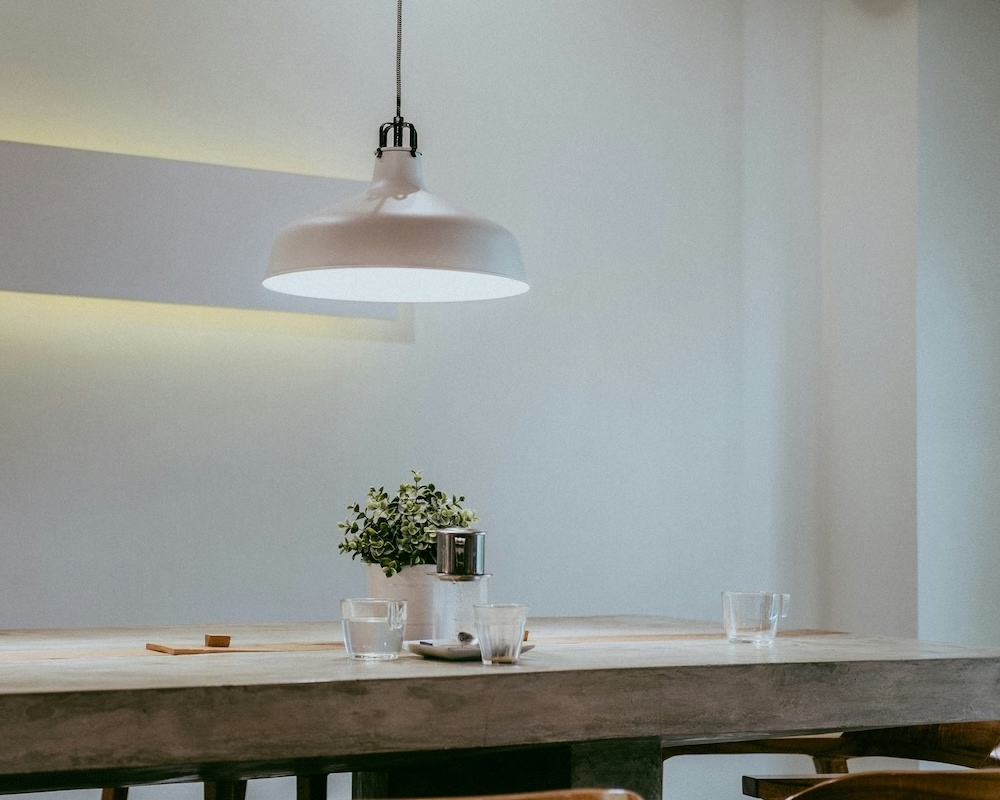
Good residential lighting uses layers. Ambient light provides general visibility, task lighting supports activities such as cooking or reading and accent lighting highlights artwork or architectural details. When recessed ceiling fixtures handle every job, the result can feel flat and overly bright.
Add shaded floor lamps and table lamps to create softer pools of light at eye level. An uplight that sends illumination toward a matte ceiling can spread light without placing a bright source in your direct view. Under-cabinet fixtures also illuminate kitchen work surfaces with less reliance on overhead lighting, although the light strip should remain hidden behind a trim piece to prevent glare.
Diffusers are especially useful when individual LED points remain visible. Frosted covers scatter light across a wider area, while fabric shades reduce harsh contrast between the fixture and the surrounding room. Choose enclosed fixtures approved for the bulb type, since LEDs still need suitable airflow and safe operating conditions.
If symptoms seem tied to one room, make changes in stages. First, remove direct glare. Next, lower output with a compatible dimmer. Then test warmer bulbs or add diffused lamps. Guidance on light-related migraine triggers supports the value of recognizing personal triggers, since comfortable lighting varies from one person to another.
Check for flicker before replacing every fixture. Some LED flicker is visible on a phone camera in slow-motion mode, but a camera test can’t diagnose every electrical issue. Buzzing, pulsing or lights that behave unpredictably should be assessed by a qualified electrician.
A comfortable room should let you read, cook and move safely without constantly noticing the lights themselves. Once direct glare is gone and brightness matches the task, the space often feels calmer without becoming dim. If headaches continue despite those changes, take your symptom record to a medical or eye care appointment so the conversation starts with specific patterns instead of guesswork.