
How to Design a High-Functioning Morning Routine Station

Image Credit: Unsplash
A well-designed morning routine station keeps everyday essentials visible, organized, and easy to reach. Instead of searching through drawers while you’re still waking up, you can move through personal care tasks in a logical order. The setup may occupy one side of a bathroom vanity or a compact shelf nearby. What matters is that every item has a practical location based on when and how you use it.
Map Your Daily Habits First
Write down each task you complete between entering the bathroom and leaving it. Include small actions such as inserting contact lenses, applying skin care products, and packing daily medications. Useful guides to daily routines can help you identify steps you perform automatically and might otherwise overlook.
Next, place those tasks in their usual order. This simple sequence shows which supplies belong at the front of the station and which can sit farther back. If you want a more detailed method, this guide to tracking habits explains how to record patterns accurately. Track your routine for three to five mornings before changing the space.
Optimize Countertop Storage
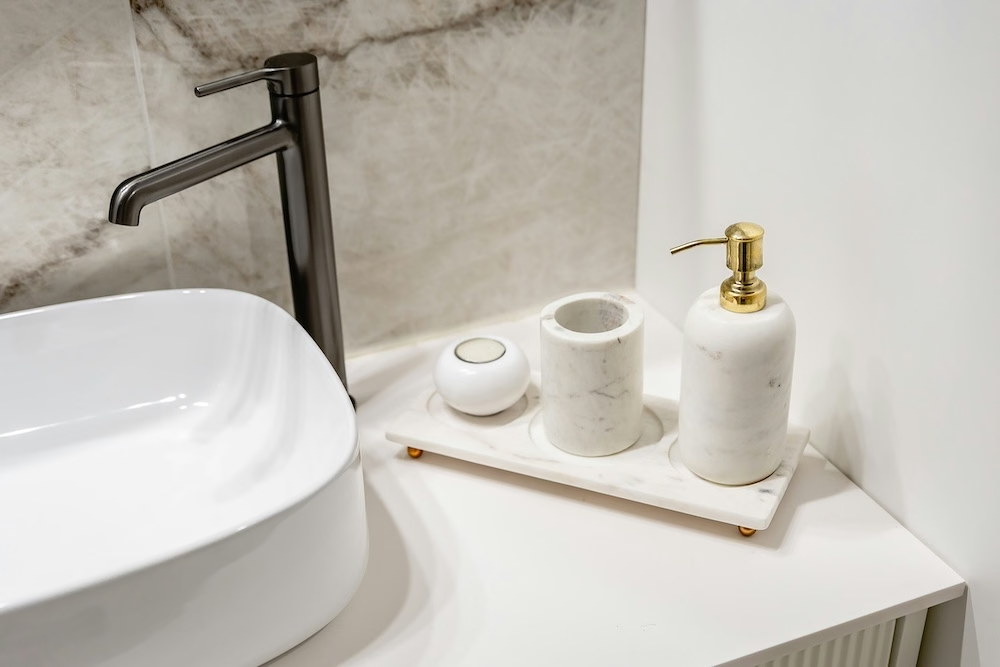
Keep the countertop focused on products you use every morning. A small tray can hold cleanser, moisturizer, and sunscreen, while a divided cup keeps grooming tools upright. Store occasional treatments and replacement products in a drawer or cabinet so they don’t crowd your working area.
Choose containers that you can lift and clean easily. Deep bins tend to hide short bottles, so use a shallow tray or tiered organizer when products vary in height. Leave one clear section of counter for setting down a contact lens case, washcloth, or small appliance. That open area gives you room to work without knocking over nearby containers.
Accommodate Specialized Hygiene Needs
Your station should adapt to any personal care instructions from medical, dental, or vision professionals. Someone with contact lenses may need clean hands, a lint-free towel, and easy access to solution. People considering lingual braces or already following an orthodontic care plan may benefit from a dedicated oral care container for the products their orthodontist recommends.
Give these supplies a distinct spot instead of mixing them into general storage. A removable caddy works well when several household members share one sink. Keep tools separated, let damp items dry fully, and follow the care directions provided by your clinician. A labeled backup kit can also prevent rushed mornings when a frequently used product runs out.
Layer Task Lighting for Precision
General ceiling lighting often casts shadows across the face, especially when you stand directly beneath the fixture. Add light near the mirror at face level for shaving, skin care, contact lens handling, and other precise tasks. Fixtures on both sides of the mirror usually create more even illumination than a single light above it.
Look for bulbs with a color rendering index of 90 or higher so skin tones and product colors appear more natural. A neutral color temperature around 3500K to 4000K works for many bathrooms without feeling harsh. If permanent fixtures aren’t possible, consider a rechargeable mirror light designed for humid spaces. Position it so glare doesn’t reflect directly into your eyes.
Choose Low-Maintenance Surfaces
Select materials that tolerate water splashes and frequent wiping. Sealed stone, solid-surface counters, tile, and quality laminates are practical options, though each has its own cleaning requirements. For trays and organizers, smooth resin, coated metal, or washable plastic generally demands less upkeep than unfinished wood or woven baskets.
Check manufacturer instructions before using acidic cleaners or abrasive pads. A five-minute weekly reset should be enough for a thoughtfully arranged station: remove every container, wipe the surface, and discard empty packaging. Advice on productive morning routines can help you decide which preparations to move to the evening, reducing both countertop clutter and morning delays.
Once the station is assembled, test it during a normal weekday instead of judging it by appearance alone. If you repeatedly reach across the sink or open the same drawer twice, move that item closer. The best final arrangement is the one that lets you complete each task in order while leaving the counter easy to clean.