
How Fire Damage Affects Drywall, Insulation, and Framing

A house fire can leave more damage than you might notice at first. Even when the flames are contained in one room, heat, smoke, soot, and water from firefighting can affect nearby walls, ceilings, and structural materials. Understanding how fire damage affects drywall, insulation, and framing helps homeowners recognize hidden problems and make better decisions about repairs.
The tricky part is that not all damage is visible from the outside. Some materials may look fine but still have smoke contamination, moisture problems, or heat-related damage behind the surface. That is why a proper inspection is important before starting repairs or moving back into the property.
How Fire Damage Affects Drywall
Drywall is commonly used for interior walls and ceilings, but it can suffer damage when exposed to high temperatures, smoke, and water. Depending on the severity of the fire, the surface may crack, discolor, bubble, or begin to crumble. These signs can mean the material needs closer inspection before it can be repaired.
Smoke and soot can also settle on drywall far from the original fire. Even if the wall does not have visible burn marks, smoke particles can leave stains and strong odors that are difficult to remove. When the drywall is badly damaged or contaminated, removing and replacing it may be necessary.
Cracking, Discoloration, and Surface Damage
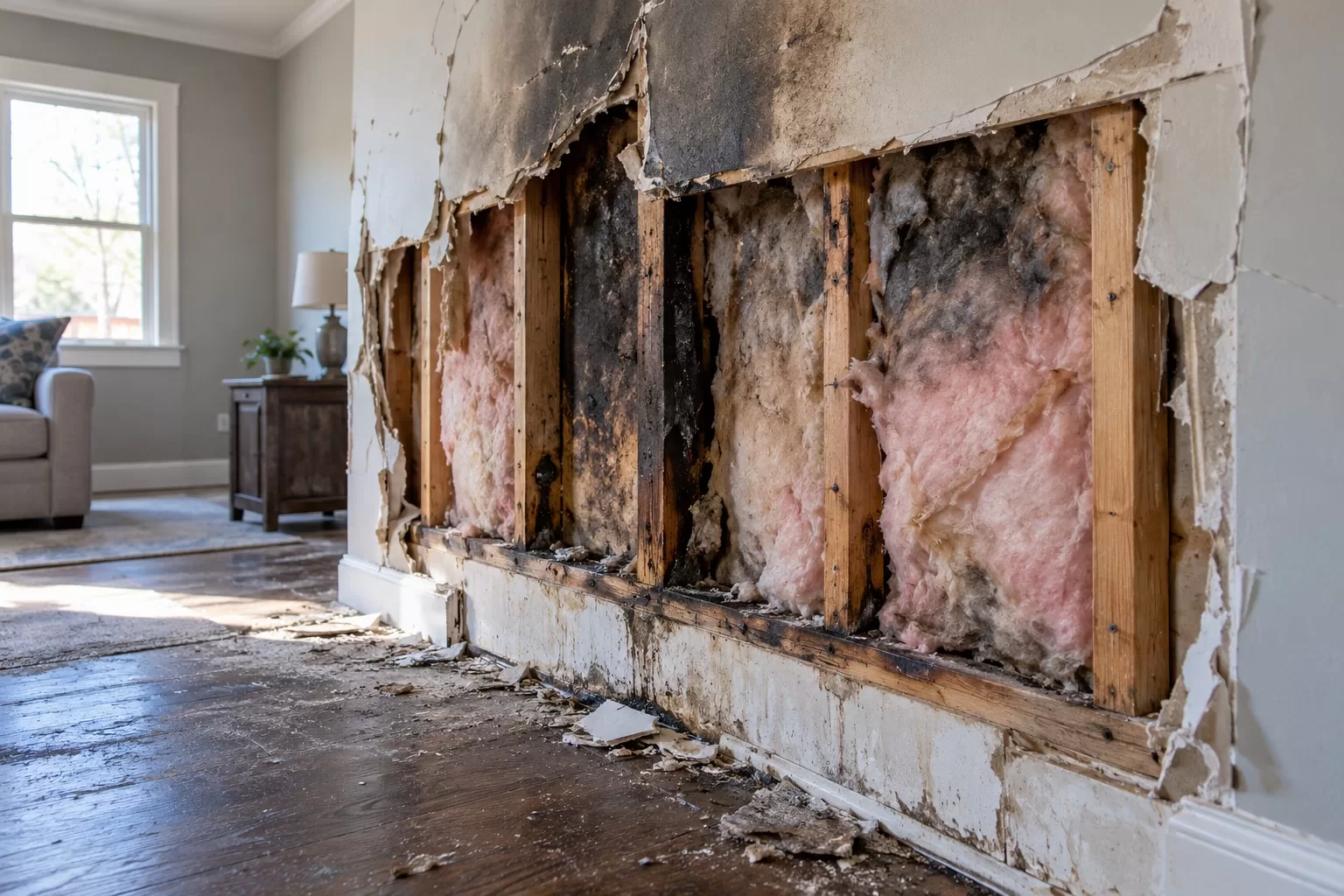
High heat can damage drywall and weaken the paper covering that holds its surface together. You may notice dark stains, peeling paint, cracked joints, or areas that feel soft after exposure to water. These problems should be assessed before applying fresh paint or installing new wall coverings.
Hidden Damage Behind Walls
Fire damage does not always stop at the visible surface. Heat and smoke can travel through gaps, wall openings, and ceiling cavities, affecting materials hidden behind drywall. Water used to extinguish the fire can also soak the wallboard, making removal necessary when it becomes swollen, damaged, or impossible to dry properly.
How Fire Damage Affects Insulation
Insulation helps regulate indoor temperatures and can reduce energy costs, but fire and smoke may affect its condition. Depending on the material and the level of exposure, insulation may become contaminated with soot, absorb smoke odors, or lose performance after heat or moisture damage. Because it is usually hidden inside walls, homeowners may not realize there is a problem until the damaged drywall is removed.
Water from firefighting can create another issue. Wet insulation may take time to dry, and some types cannot be effectively cleaned or restored once saturated or contaminated. A restoration professional can inspect the affected areas and determine whether cleaning, drying, or replacement is the right option.
Smoke and Soot Contamination
Smoke particles can enter wall cavities through small openings and settle on insulation. Porous materials may hold unpleasant odors even after nearby surfaces have been cleaned. If contamination cannot be safely removed, replacing the affected insulation may be necessary to help restore indoor air quality.
Heat and Water Damage to Insulation
High temperatures can affect insulation differently depending on its type and how close it was to the fire. Water can also reduce its effectiveness and create conditions that support mold growth when materials remain damp. The U.S. Environmental Protection Agency recommends drying wet materials within 24 to 48 hours when possible to help prevent mold growth, although the appropriate response depends on the material and the extent of the damage (EPA guidance).
How Fire Damage Affects Wood Framing
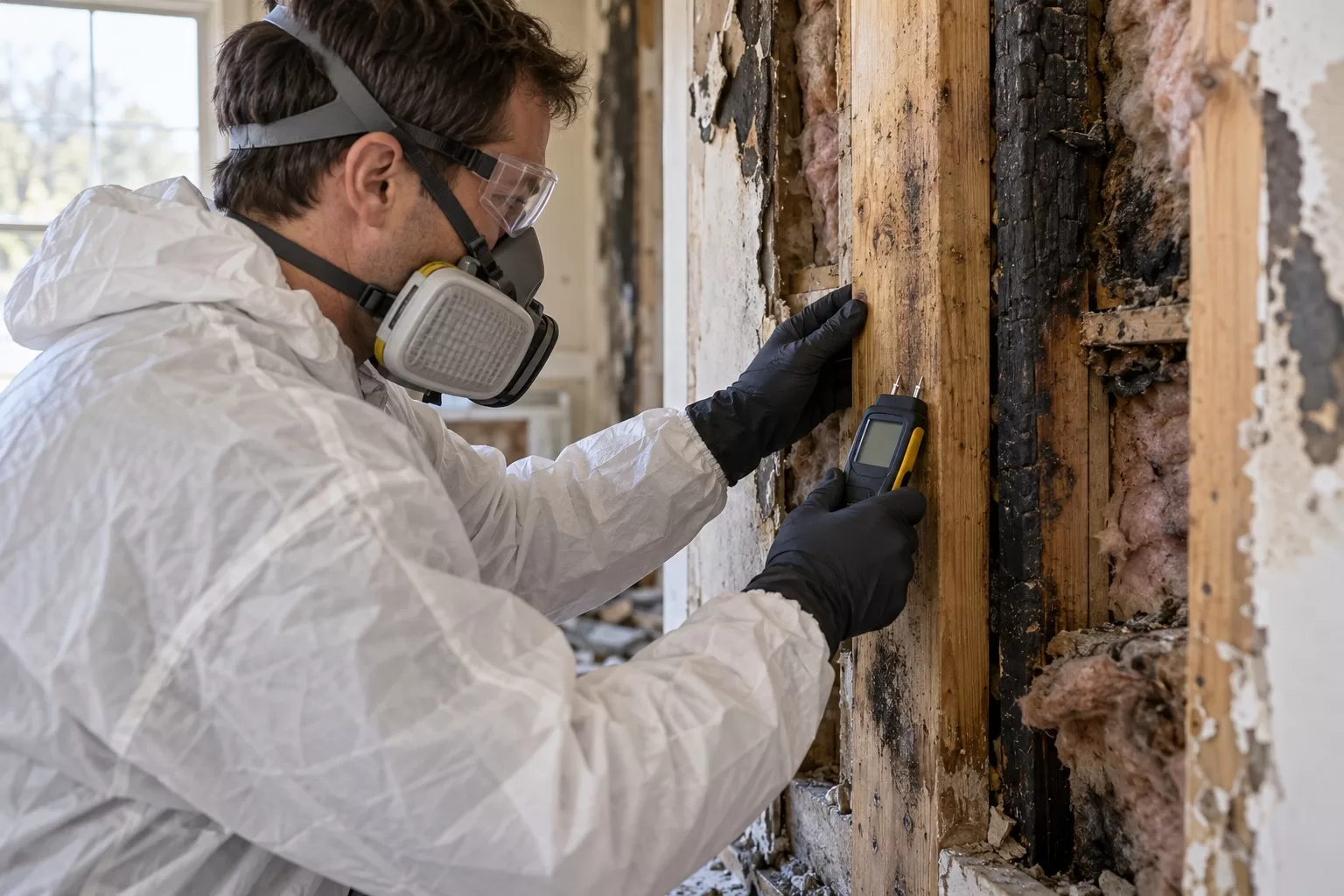
Wood framing supports walls, floors, and ceilings throughout a home. When exposed to intense heat, wooden studs, joists, and beams may become charred or lose strength, depending on how long the fire lasted and how deeply the heat affected the material. Damage to these components can create serious safety concerns, even if the surrounding walls appear mostly intact.
Water used during firefighting can affect the framing, too. If the wood stays wet for an extended period, it may develop mold or other moisture-related deterioration. Proper inspection helps determine whether the framing can remain in place, needs repairs, or requires replacement.
Charring and Structural Weakness
Charred wood is a clear warning sign that a closer inspection is needed. However, the appearance of the surface alone cannot confirm whether a beam or stud is safe to support the building. A qualified professional should assess the damage, and a structural engineer may be needed when important load-bearing components are affected.
Moisture Damage After a Fire
Even after the flames are out, water trapped inside walls and floors can cause further problems. Damp framing may support mold growth, while prolonged moisture can contribute to wood deterioration. Finding and drying affected areas early can help limit additional damage and reduce the scope of later repairs.
Signs of Hidden Fire Damage Inside Walls
Some warning signs may appear days after a fire, while others remain hidden until damaged materials are removed. Persistent smoke odors, discolored drywall, damp patches, peeling paint, and visible charring around wall openings are all reasons to arrange an inspection. Sagging ceilings or signs of structural movement are especially concerning and should not be ignored.
Avoid opening damaged walls or entering areas that may be structurally unsafe just to check what is behind them. Fire can also affect electrical wiring and other building systems, which may not be safe to use until inspected. If you suspect serious damage, keep away from the affected area and seek professional guidance.
Can Fire-Damaged Materials Be Repaired?
Not every material affected by a fire needs to be replaced. Lightly affected surfaces may be suitable for professional cleaning, while severely damaged drywall, contaminated insulation, and weakened framing may require removal or repair. The decision depends on the material, the level of contamination, and whether it can be restored safely.
The restoration process from Spartan Restoration Inc. usually starts with a safety assessment and a detailed inspection. If your property needs emergency fire damage restoration, professionals can identify materials that require cleaning, drying, removal, or replacement before reconstruction begins. Taking these steps in the right order helps prevent hidden problems from being covered up by new drywall or paint.
Conclusion
Fire damage can affect more than the areas burned by flames. Drywall may crack or absorb smoke odors, insulation can become contaminated or wet, and wood framing may lose strength after intense heat exposure. Even when the damage looks minor, hidden problems inside walls and ceilings can lead to bigger repairs if left unaddressed.
Having the affected areas inspected helps you understand which materials can be cleaned, dried, or repaired and which need replacement. If your home has experienced a fire, Professional fire damage restoration can help with and guide you through the recovery process. Taking the right steps early can help prevent further damage and make your home safer as restoration moves forward.
Frequently Asked Questions
Does drywall need to be replaced after a house fire?
Not always. Drywall may be cleaned or dried if the damage is limited, but severely burned, swollen, or contaminated sections may need replacement.
Can smoke damage insulation inside walls?
Yes. Smoke particles and odors can enter wall cavities and settle on insulation, sometimes requiring removal and replacement.
How can you tell if wood framing is damaged by fire?
Look for charring, cracking, or other visible changes, but remember that appearance alone cannot confirm structural safety. A qualified professional should assess suspected damage.
Can fire-damaged walls develop mold?
Yes. Water used during firefighting can leave drywall, insulation, and framing damp. If the moisture is not addressed, mold may develop.