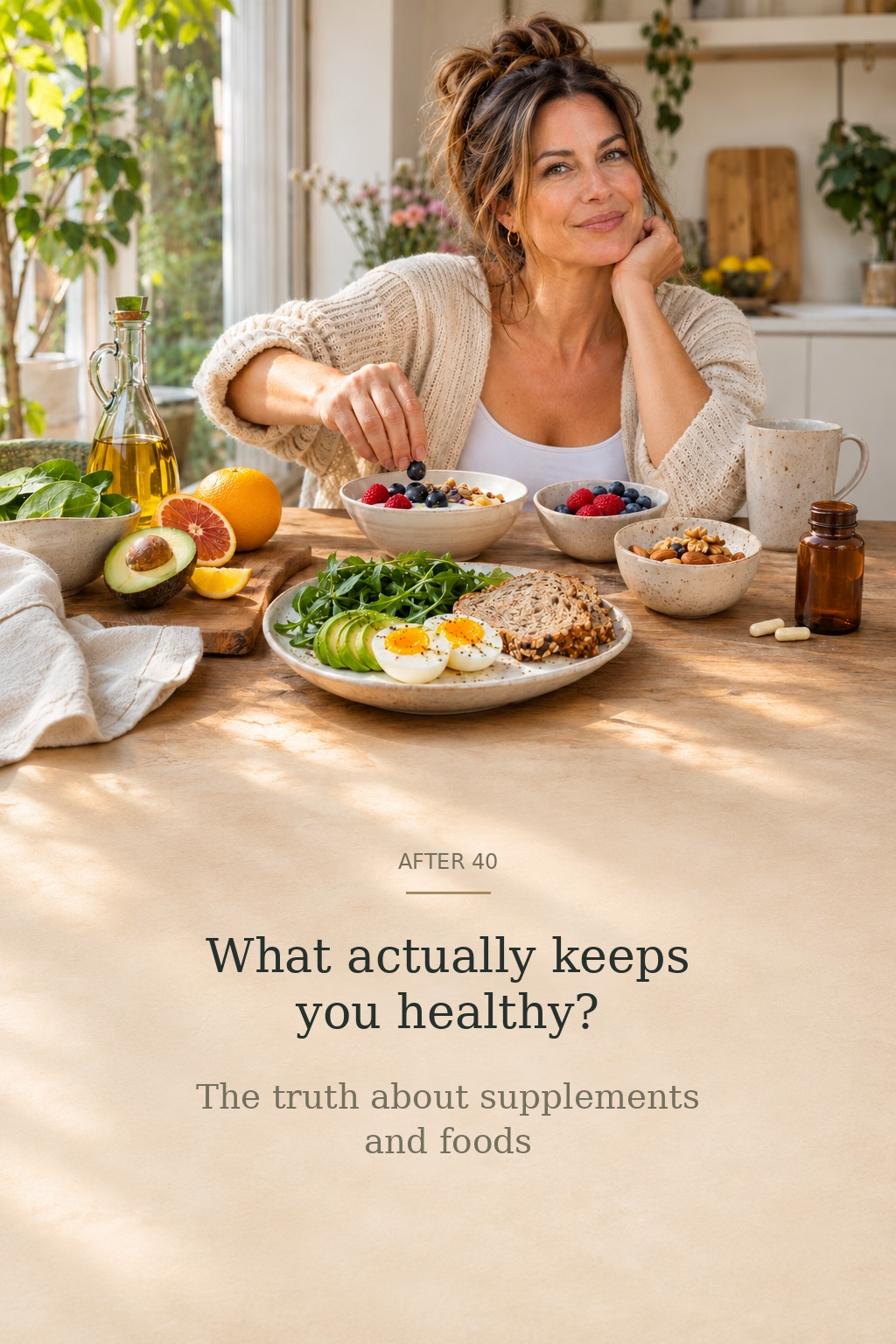
After 40: What Actually Keeps You Healthy? The Truth About Supplements and Foods

Turning 40 can make many of us think more carefully about our health. We may notice new questions about energy, bones, skin, digestion or the changes that can come with perimenopause. It is tempting to look for a simple list of supplements to start taking. But there is no universal supplement routine that everyone needs simply because they have reached 40.
A more useful place to begin is with everyday habits and a varied diet. Some foods are worth including because they contribute useful nutrients; supplements may be helpful in particular situations, but they are not automatically necessary or harmless. Here is a closer look at four things often discussed: olive oil, flaxseed, vitamin D and collagen.
Olive oil: a kitchen staple, not a daily “shot”
Olive oil is a familiar part of Mediterranean cooking, and it is best thought of as a food rather than a supplement. A practical approach is to use it in meals and, where it suits your diet, choose it in place of fats that are higher in saturated fat. The European Food Safety Authority notes that replacing fats high in saturated fat with vegetable oils rich in unsaturated fats, including olive oil, is a better choice for health.
There is no need to drink a spoonful of oil as a wellness ritual. It is the overall pattern of eating—and what olive oil replaces—that matters more than treating one ingredient as a cure-all.

Flaxseed: fibre and plant-based omega-3
Flaxseed, also called linseed, is a food that provides fibre and the plant omega-3 fatty acid ALA. It can be sprinkled into porridge, yoghurt or smoothies, or added to baking. ALA is essential, which means we need to get it from food. The body converts only a small amount of ALA into the omega-3s EPA and DHA, which are found mainly in fish and seafood.
Flaxseed can be a useful part of a varied diet, especially for people who do not eat fish, but it should not be presented as a guaranteed treatment for menopause symptoms or as a substitute for medical care. As with any food, the right amount depends on the person and their usual diet.
Vitamin D: important, but not automatically needed by everyone
Vitamin D helps the body absorb calcium and supports bone health. That makes it important throughout adulthood, but it does not mean that everyone over 40 should begin taking a supplement. Sun exposure, diet, health conditions and individual risk all matter, and high-dose supplements can cause harm. Some medicines can also interact with vitamin D.
If you are concerned about low vitamin D or bone health, ask a doctor or pharmacist whether a supplement is appropriate for you and what dose makes sense. Avoid starting high doses based only on age or on a social-media recommendation.

Collagen: promising marketing, mixed evidence
Collagen supplements are widely promoted for skin, hair, nails and joints. Some clinical studies report benefits for skin measures, but the overall picture is not settled. A 2025 systematic review and meta-analysis of 23 randomised trials reported that the apparent skin benefits were not seen when the researchers looked separately at studies that were not funded by pharmaceutical companies or at higher-quality studies.
That does not prove collagen can never help anyone; it means the evidence is not strong enough to promise a result or say that everyone should take it after 40. If you are considering it, check the product and its ingredients, consider the cost, and ask a healthcare professional if you have a medical condition, take medicines or have allergies.
What about other vitamins and minerals?
Iron, vitamin B12, calcium and other nutrients may matter for some people, but a general “after 40” list can be misleading. Needs can depend on diet, menstrual bleeding, health conditions, medicines and whether a deficiency has been identified. Taking more than you need is not necessarily beneficial, and supplements can interact with medicines.
Food supplements are not a replacement for a balanced diet. Before starting one, consider what you want it to help with, whether there is good evidence for that use, and whether it is suitable alongside your medicines and health history. A doctor, pharmacist or registered dietitian can help you make that decision.
A sensible approach after 40
Rather than starting a collection of supplements on your 40th birthday, focus on habits you can sustain: varied meals, regular movement, enough sleep and routine preventive care. Use olive oil and flaxseed as foods you enjoy; consider vitamin D or other supplements only when your circumstances give you a reason; and view collagen claims with a healthy degree of curiosity.
If you are experiencing symptoms that may be related to perimenopause, discuss them with a healthcare professional. Supplements are not a substitute for an assessment or for evidence-based treatment. The goal is not to take everything marketed for women over 40, but to find out what—if anything—is useful for you.
This article is for general information and is not personal medical advice. Speak with a healthcare professional before using supplements to treat a health concern or combining them with medicines.