Built in Impossible Places: 5 Remarkable Buildings Around the World

Some buildings are memorable for their shape. Others make you wonder how anyone found a place to build them at all. Perched on a cliff, tucked between enormous rocks or carved into a hillside, these places show how architecture can respond to challenging locations in unexpected ways.
In my recent article on extraordinary buildings inspired by nature, I looked at the ways natural forms influence architectural design. This time, the focus is on something different: buildings and settlements whose locations are as extraordinary as their architecture.
1. Casa do Penedo, Portugal
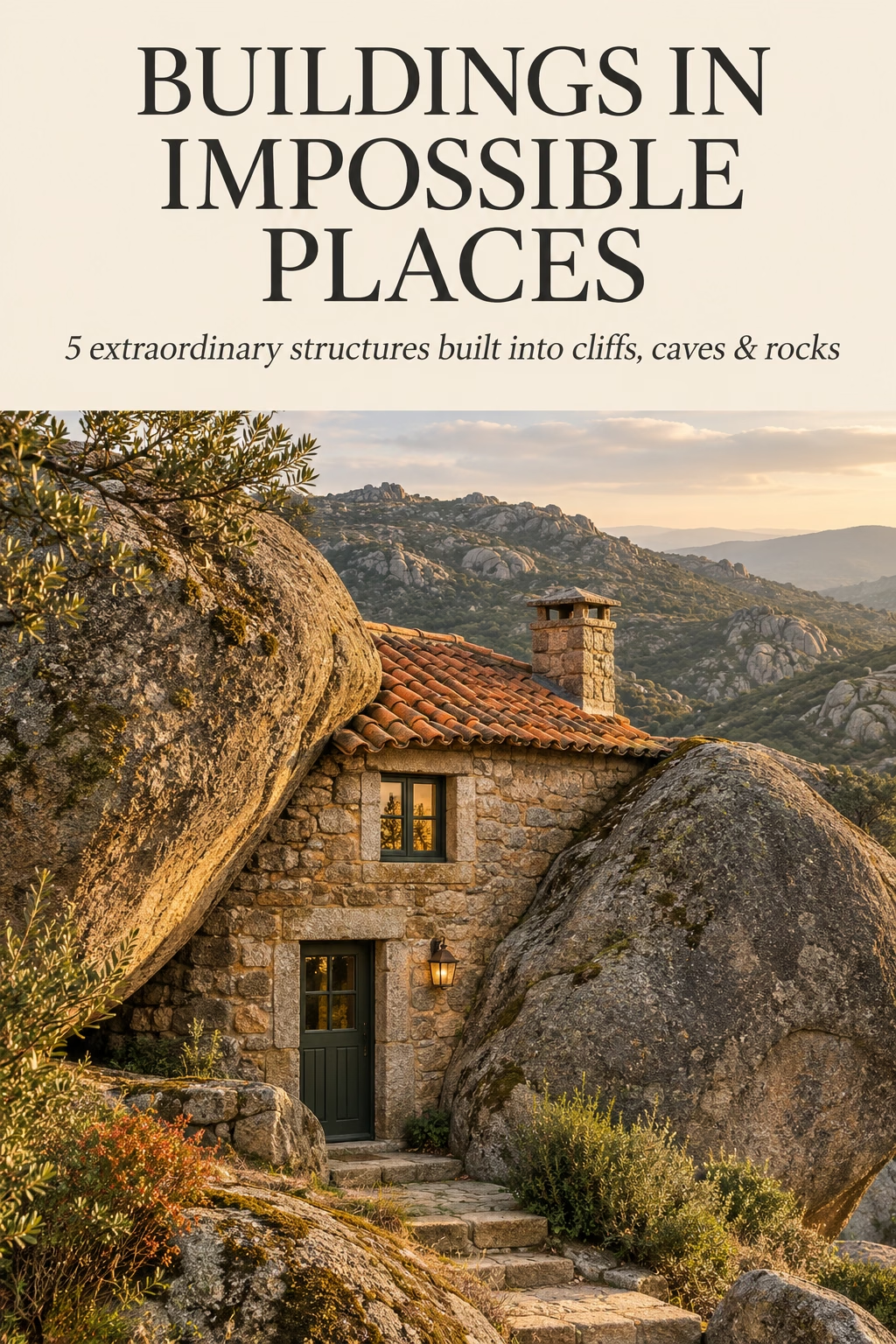
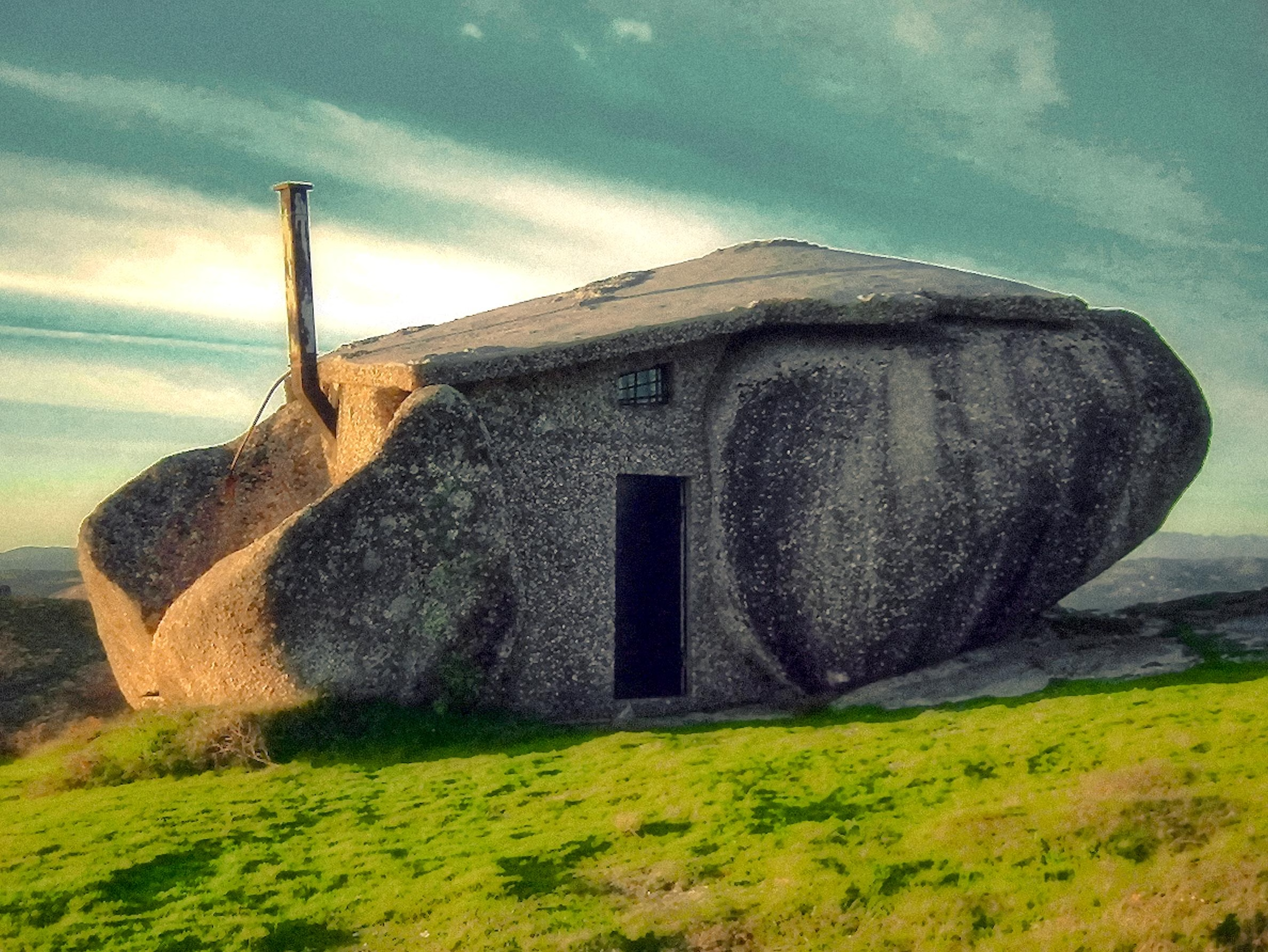
In the mountains of Fafe in northern Portugal, Casa do Penedo seems to have been fitted into the landscape rather than built on top of it. Four large boulders form much of its structure, giving the house its famously unusual appearance.
The house was inaugurated in 1974 and designed as a family retreat. Its remote setting and stone-like exterior make it easy to see why it has attracted visitors from around the world. From a distance, it can look almost like a natural rock formation with windows and a door.
2. The Hanging Temple, China
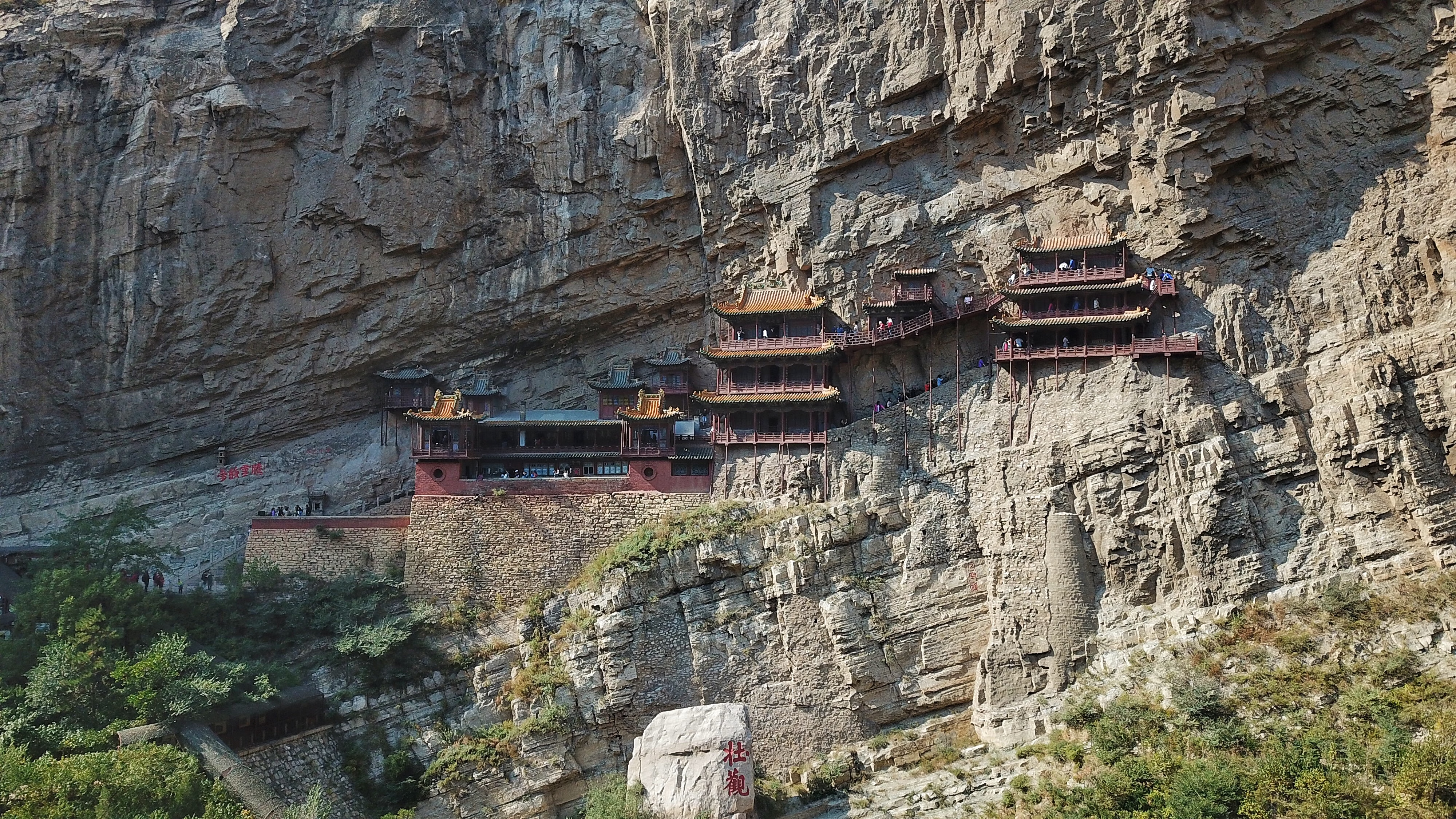
Built into a steep cliff on Mount Heng in Shanxi Province, the Hanging Temple appears to cling to the rock face above a valley. The temple complex is largely wooden, with halls and walkways arranged along the cliff.
Its position is striking, but the design is also carefully adapted to the site. Rather than spreading across a level plot, the buildings follow the shape of the rock. Looking at the temple, it is hard not to wonder what the construction process must have been like more than a thousand years ago.
3. The Monasteries of Meteora, Greece
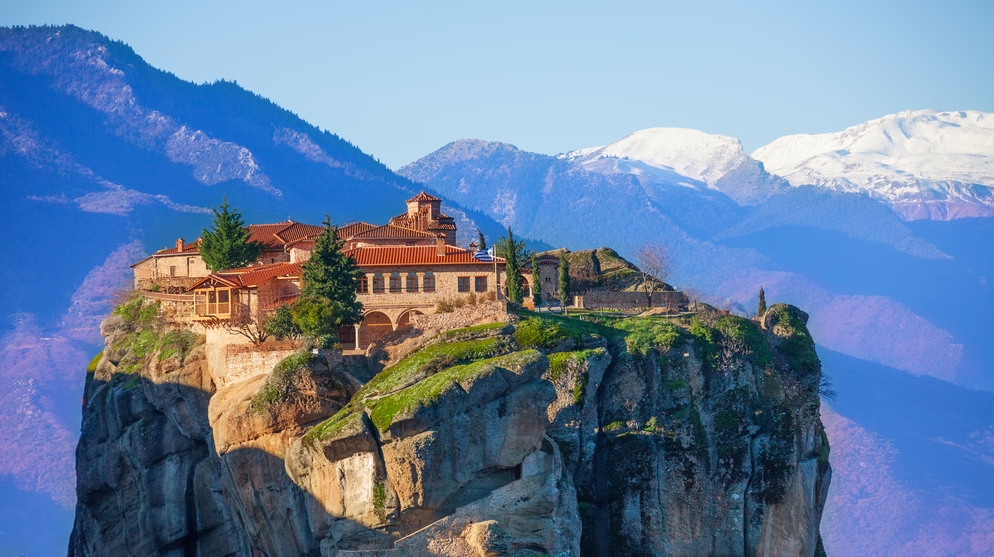
In central Greece, monasteries sit atop tall sandstone pillars that rise dramatically above the surrounding landscape. The name Meteora is often translated as “suspended in the air,” which feels fitting when you see the buildings perched on their narrow rocky summits.
Monks began settling in the area from around the 11th century, and 24 monasteries were built there over time. Today, the remaining monasteries are part of a UNESCO World Heritage Site. Their remote positions once offered solitude and seclusion; now they create one of the most remarkable architectural views in Europe.
4. Sümela Monastery, Türkiye
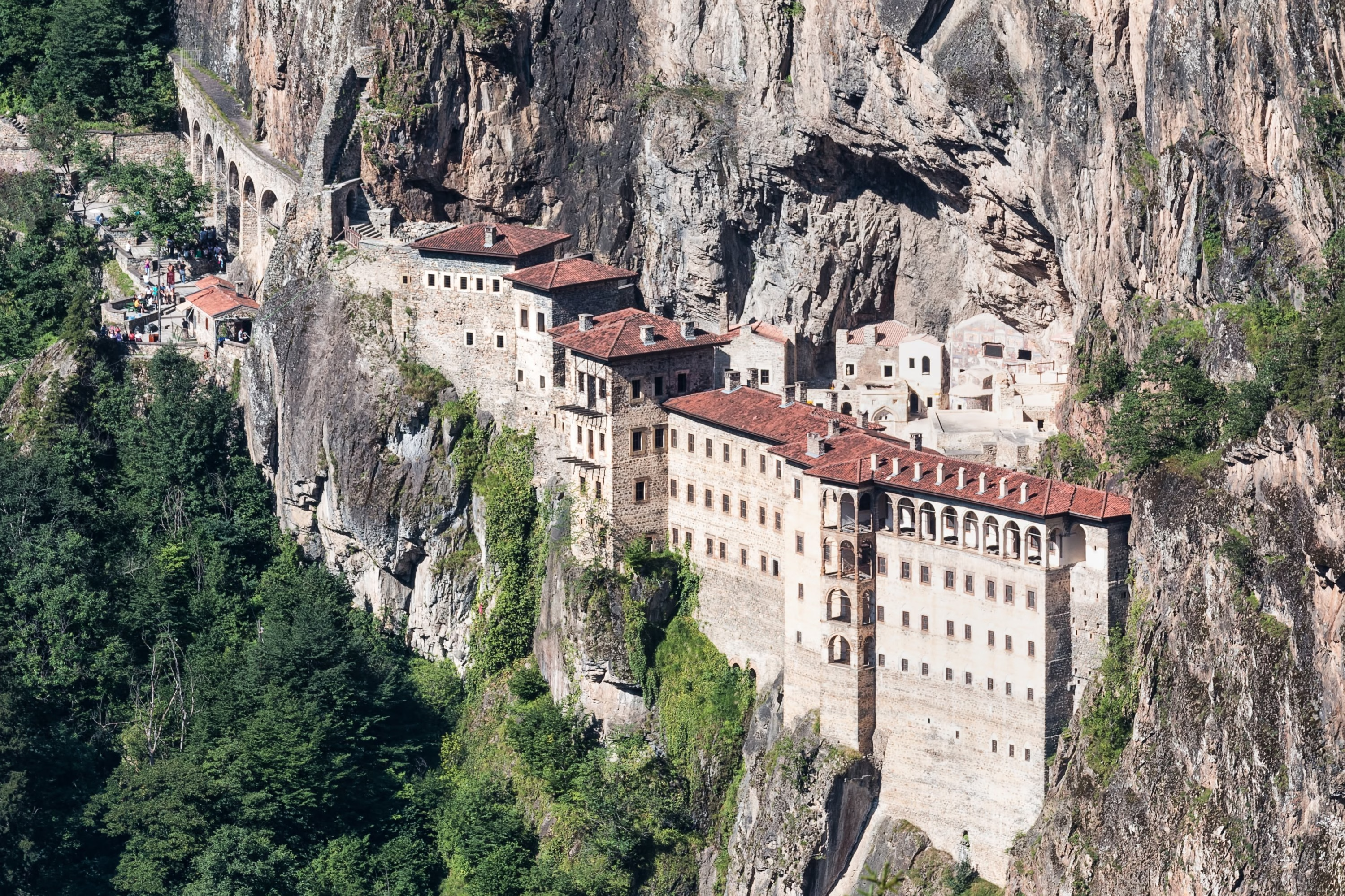
Sümela Monastery stands on a steep mountainside in the forests of the Trabzon region, with parts of the complex built around a natural cave. Seen from across the valley, its pale walls appear against the dark green slope.
The cave is central to the site’s story and layout. Rather than occupying a separate building, it forms part of a larger monastery complex that grew around the mountain setting. The result is a place where architecture, rock and forest seem closely connected.
5. The Sassi of Matera, Italy
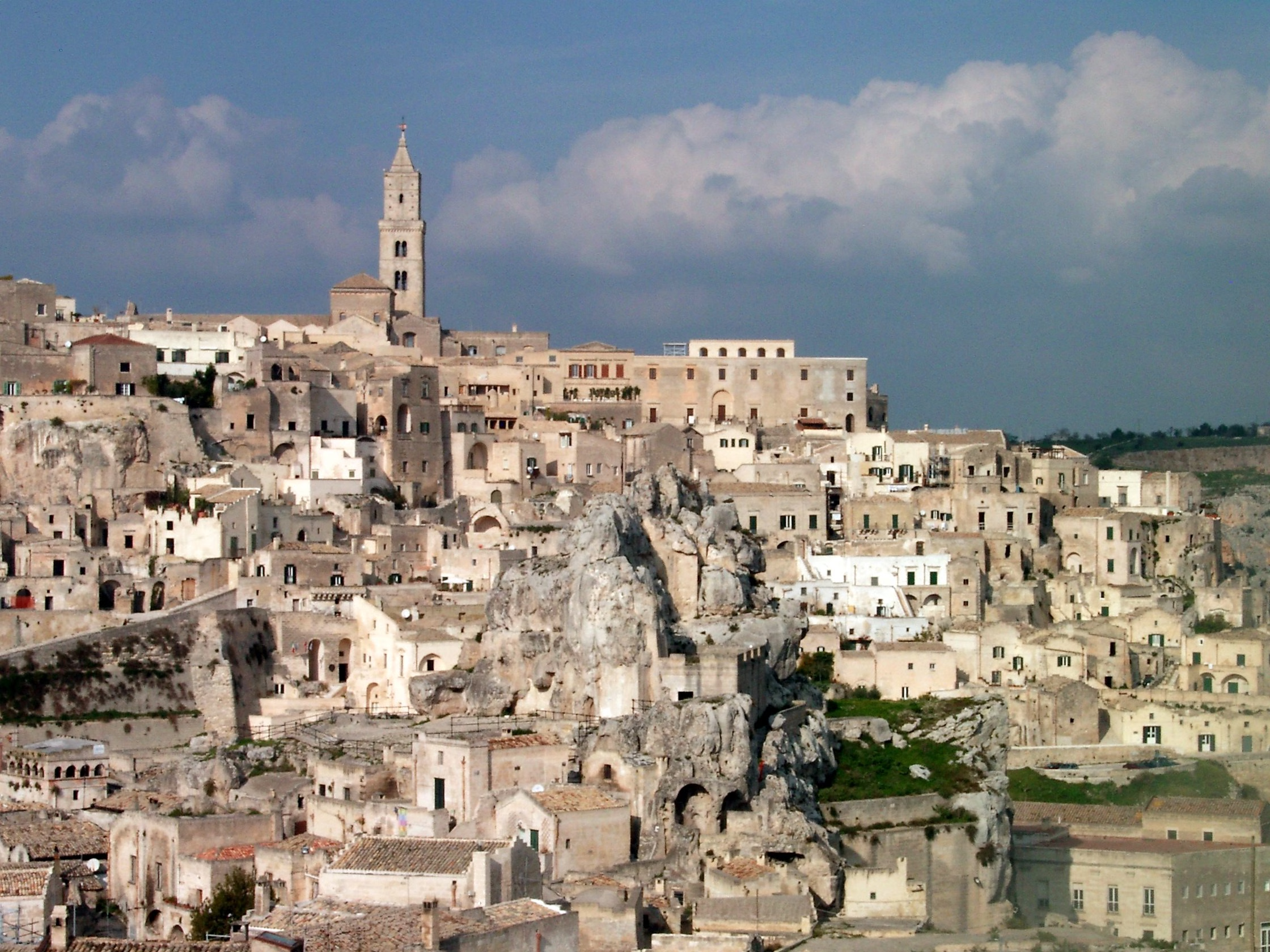
Matera’s Sassi districts are not a single unusual building but an entire historic neighbourhood of homes, churches and other spaces carved into the rock. Some of the earliest dwellings began as caves, later adapted with walls and connected to a wider network of streets and courtyards.
The result is an urban landscape that feels unlike a conventional town. Buildings seem to emerge from the hillside, while narrow lanes and terraces follow its contours. The Sassi are recognised as a UNESCO World Heritage Site and offer a fascinating example of how people have made use of a challenging landscape over many centuries.
When the location becomes part of the architecture
These places are very different: a family retreat between boulders, wooden halls on a cliff, monasteries above the Greek plains, a sanctuary set into a forested mountain and a historic city shaped from rock.
What connects them is the way their settings became part of the design. The landscape presented a challenge, but it also gave each place its character. Instead of choosing a flat, ordinary site, their builders worked with the rock, slope and terrain around them.
That is what makes unusual architecture so compelling. It invites us to look beyond the façade and ask a few questions: Why build here? How did the structure adapt to its location? And what might it feel like to live, work or worship in a place so closely tied to its surroundings?
Which of these extraordinary places would you most like to visit?