10 Extraordinary Buildings Around the World Inspired by Nature

A flower opening towards the sun, branches dividing above a woodland path, a pebble softened by water: nature offers architects an extraordinary vocabulary of forms.
What interests me most is how differently those ideas can be translated into buildings. Sometimes the connection is immediately visible in a roof shaped like petals. Elsewhere, it becomes apparent only inside, where columns branch like trees or rooms connect like underground chambers.
These ten buildings explore that relationship in different ways, from Gaudí’s Barcelona to a temple in the foothills of the Andes. Some borrow nature’s silhouettes; others draw on its structures, movement or atmosphere.
1. Lotus Temple, New Delhi, India
Architect: Fariborz Sahba | Natural inspiration: the lotus flowerThe Lotus Temple transforms a familiar flower into a place of contemplation. Its marble-clad petals curve upwards around the central space, creating the impression of a bloom opening above the surrounding pools.
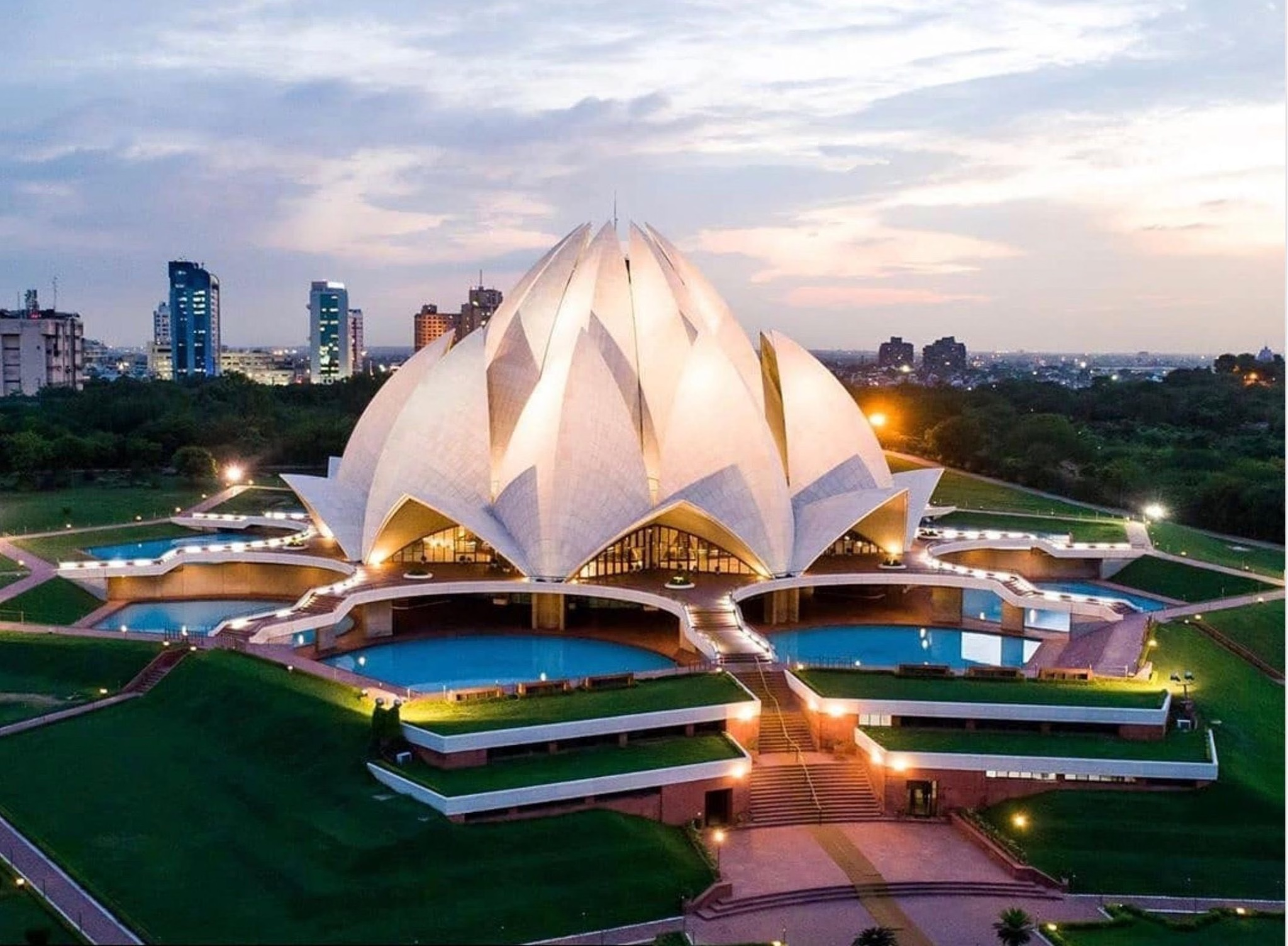
Sahba deliberately chose the lotus as the basis of the design, drawing on its significance within India’s cultural and religious traditions. The building is a Bahá’í House of Worship, welcoming people of different backgrounds. The repetition is what makes the composition so compelling. Individual petals become part of a coherent whole, giving a large structure an unexpectedly delicate appearance. For a design enthusiast, this is a lesson in restraint: one strong idea, developed consistently, can be more memorable than an abundance of decorative details.
Source: https://sahbaarchitect.com/lotus/
2. Sagrada Família, Barcelona, Spain
Architect: Antoni Gaudí, continued by successive teams | Natural inspiration: trees and forest canopies The most powerful encounter with nature at the Sagrada Família happens inside. Columns rise like trunks before dividing into branches that support the vaults overhead. This is more than a decorative resemblance. Gaudí studied how branching forms could distribute loads, bringing structural reasoning and visual expression together. The basilica’s own architectural explanation describes the continuity between trunk and branches as central to his column design.
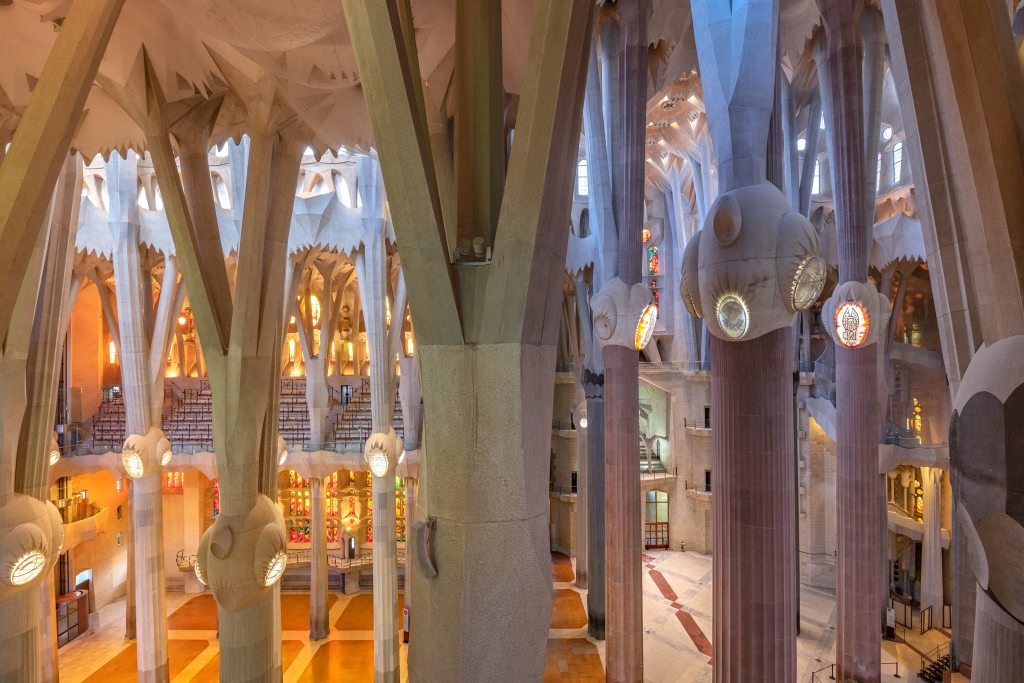
Looking upwards, the interior becomes a forest translated into stone. Its scale is monumental, yet the branching rhythm offers something familiar. What makes the space particularly moving is that its natural reference operates at the level of experience: the sense of standing beneath a canopy, with light filtering through above.
3. ArtScience Museum, Singapore
Architect: Moshe Safdie / Safdie Architects | Natural inspiration: a lotus in bloom
At Singapore’s Marina Bay, the ArtScience Museum offers a very different interpretation of the lotus. Broad white forms reach upwards and outwards, giving the building the presence of a contemporary sculpture. The museum describes its architecture as inspired by a lotus in full bloom. Safdie’s practice also notes the resemblance, while explaining the use of fibre-reinforced polymer for its exterior cladding.
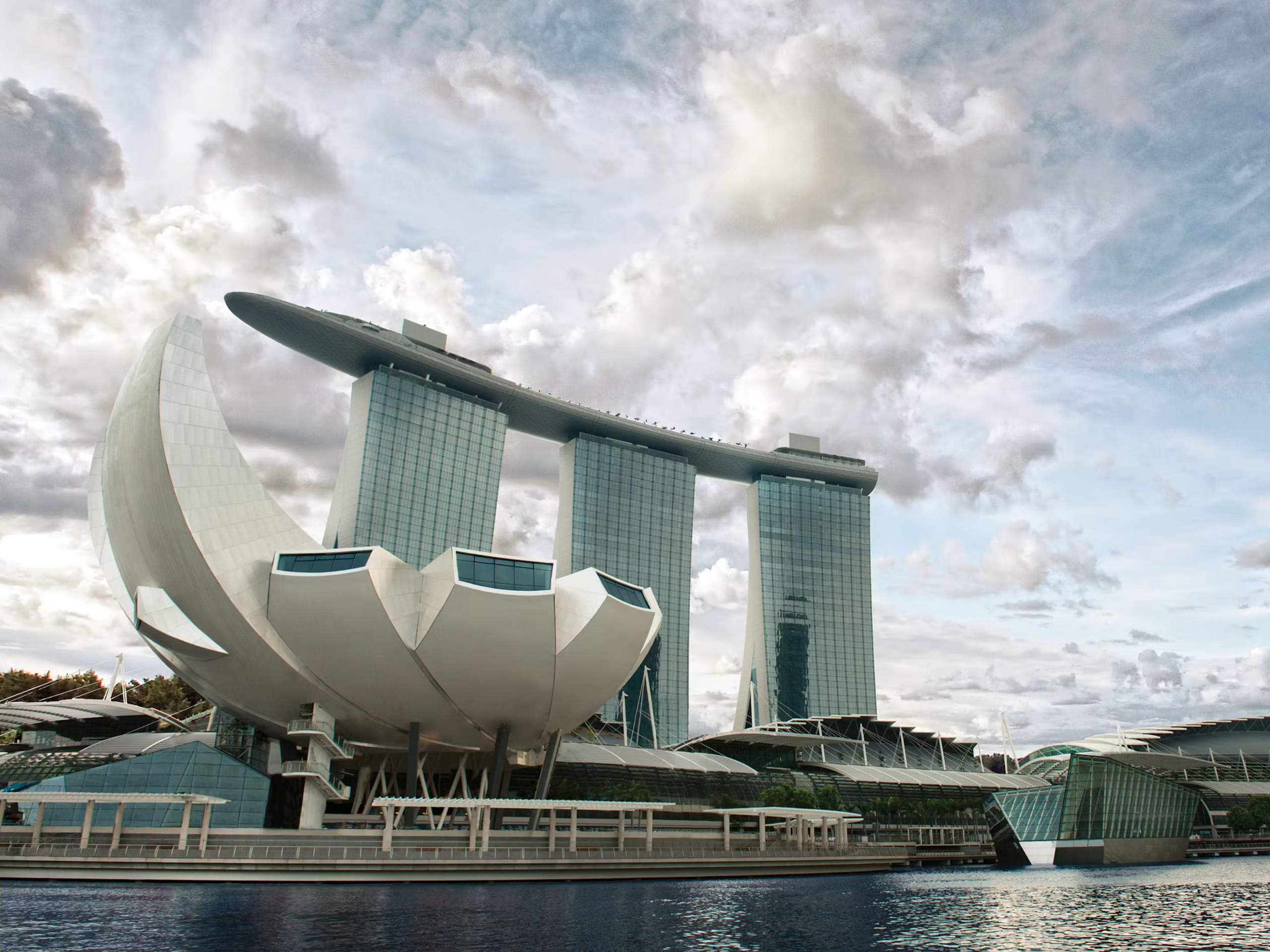
There is a practical dimension to the sculptural form: the museum incorporates rainwater harvesting into its design. I find the relationship between mass and empty space particularly effective. Gaps between the projecting forms are as important as the forms themselves, allowing the silhouette to remain legible against the skyline.
Source: https://www.safdiearchitects.com/projects/marina-bay-sands-artscience-museum
4. Milwaukee Art Museum’s Quadracci Pavilion, Wisconsin, USA
Architect: Santiago Calatrava | Natural reference: the movement of birds’ wings Some buildings suggest movement. The Quadracci Pavilion actually moves.
Its famous Burke Brise Soleil is a movable sunscreen whose two sides open and close like a bird extending and folding its wings. Calatrava’s practice explicitly describes that connection, making the pavilion a particularly vivid example of natural movement translated into architecture. The wings also serve a purpose: they shade the glass-covered space beneath them. Engineering becomes part of the building’s public identity.
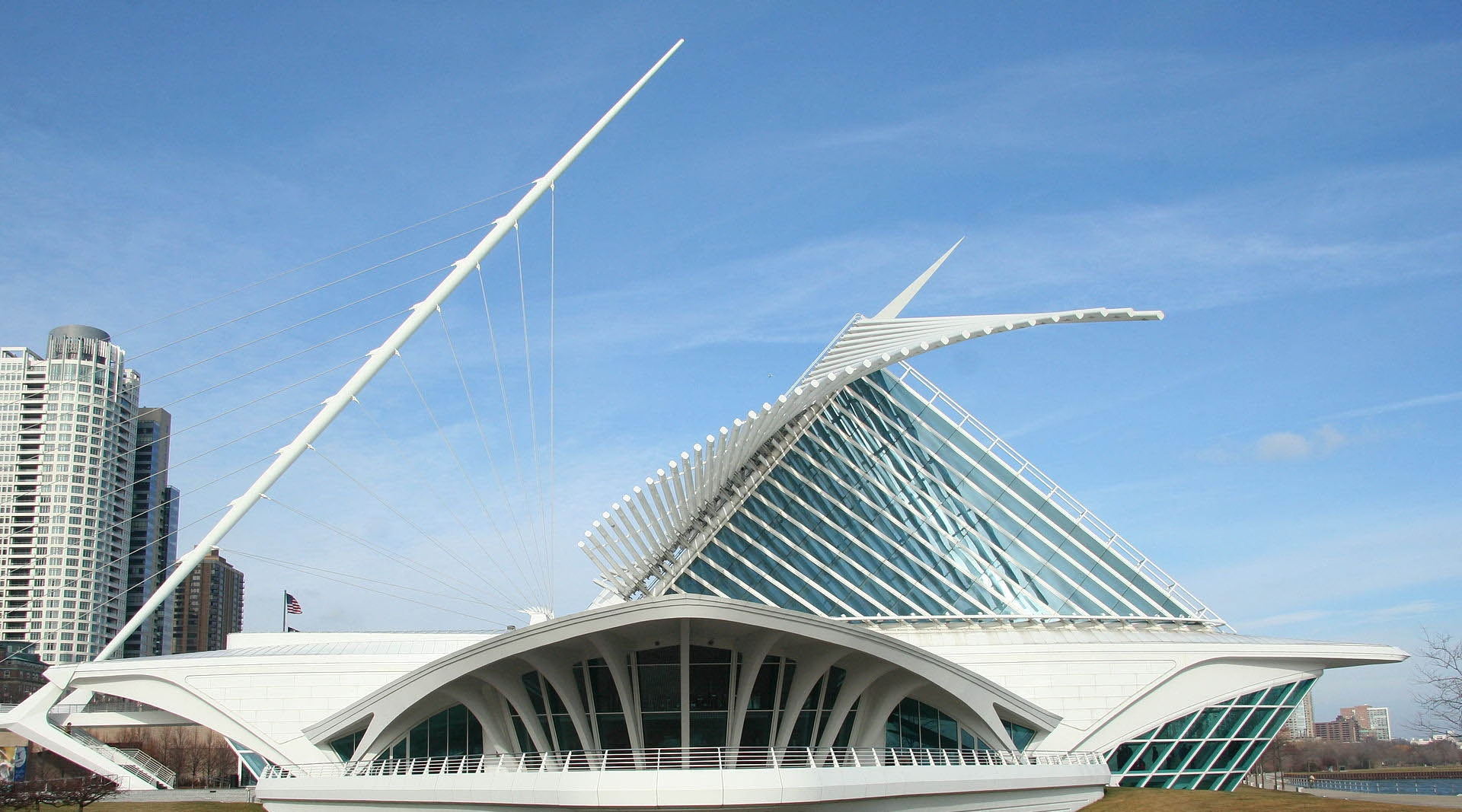
The attraction is not simply the dramatic outline. It is the changing silhouette, which makes the architecture feel responsive rather than fixed. A familiar gesture from the animal world becomes an event at the scale of a building.
Source: https://prod.calatrava.com/projects/milwaukee-art-museum.html
5. Casa Batlló, Barcelona, Spain
Architect: Antoni Gaudí | Natural inspiration: the sea and organic forms
Casa Batlló brings nature into the middle of an urban street. Its façade combines rippling stone, coloured surfaces and curved balconies, while the roof introduces a scaly, animal-like profile. The building’s official interpretation emphasises the sea, nature and fantasy. Its marine references are especially appealing: the impression of water in motion and surfaces that catch light in changing ways.
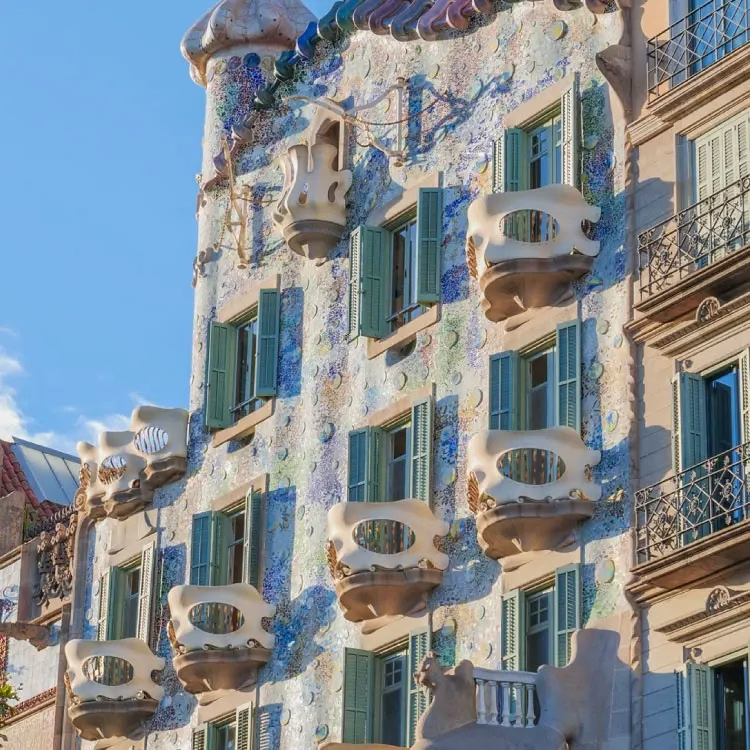
Unlike a building based on a single flower, Casa Batlló allows several associations to coexist. The result feels imaginative without requiring one definitive explanation for every detail. For me, its enduring appeal lies in the relationship between colour and texture. The façade invites close attention as well as admiration from across the street.
Source: https://www.casabatllo.es/en/antoni-gaudi/casa-batllo/facade/
6. Eden Project Biomes, Cornwall, England
Architects: Grimshaw | Natural inspiration: soap bubbles
At the Eden Project, a surprisingly everyday phenomenon helped solve an architectural problem: soap bubbles. The project’s account explains that bubbles offered a model for structures that could adapt to the uneven, changing ground of a former clay pit. The resulting interconnected domes create generous enclosed environments for plants.
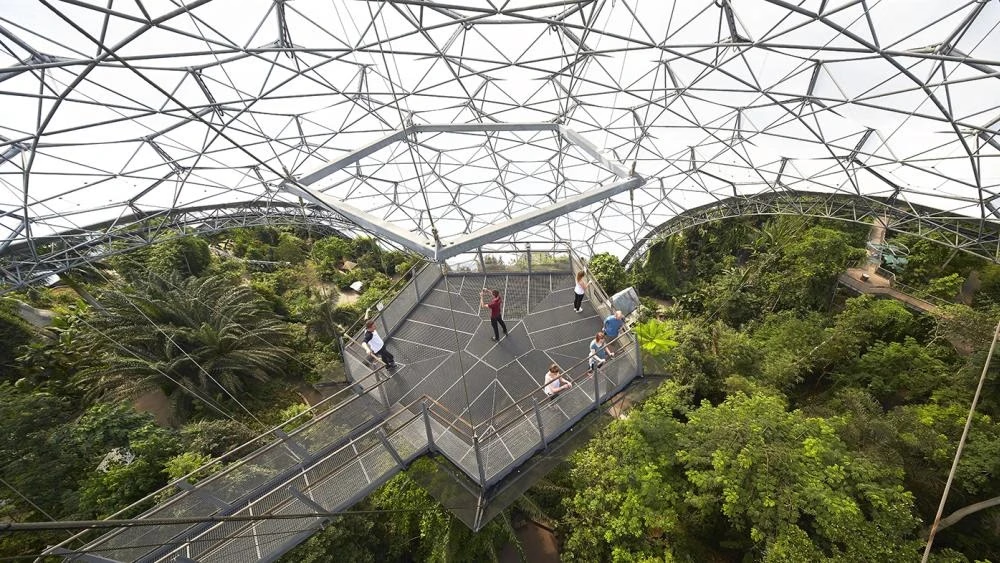
This is nature-inspired design at its most inventive. An observation about how bubbles meet a surface becomes a strategy for building at a much larger scale. The appeal is also visual. Repeated rounded volumes soften the industrial landscape, while their lightweight appearance offers a striking contrast to the depth and scale of the former excavation.
Source: https://www.edenproject.com/about-us/architecture
7. Harbin Opera House, Harbin, China
Architects: MAD Architects | Natural inspiration: the surrounding landscape, wind and water
Harbin Opera House looks less like an object placed on the ground than a continuation of the landscape. MAD Architects describes the building as appearing to have been shaped by wind and water. Its flowing profile responds to the surrounding terrain, using broad curves to establish a relationship between architecture and its setting.
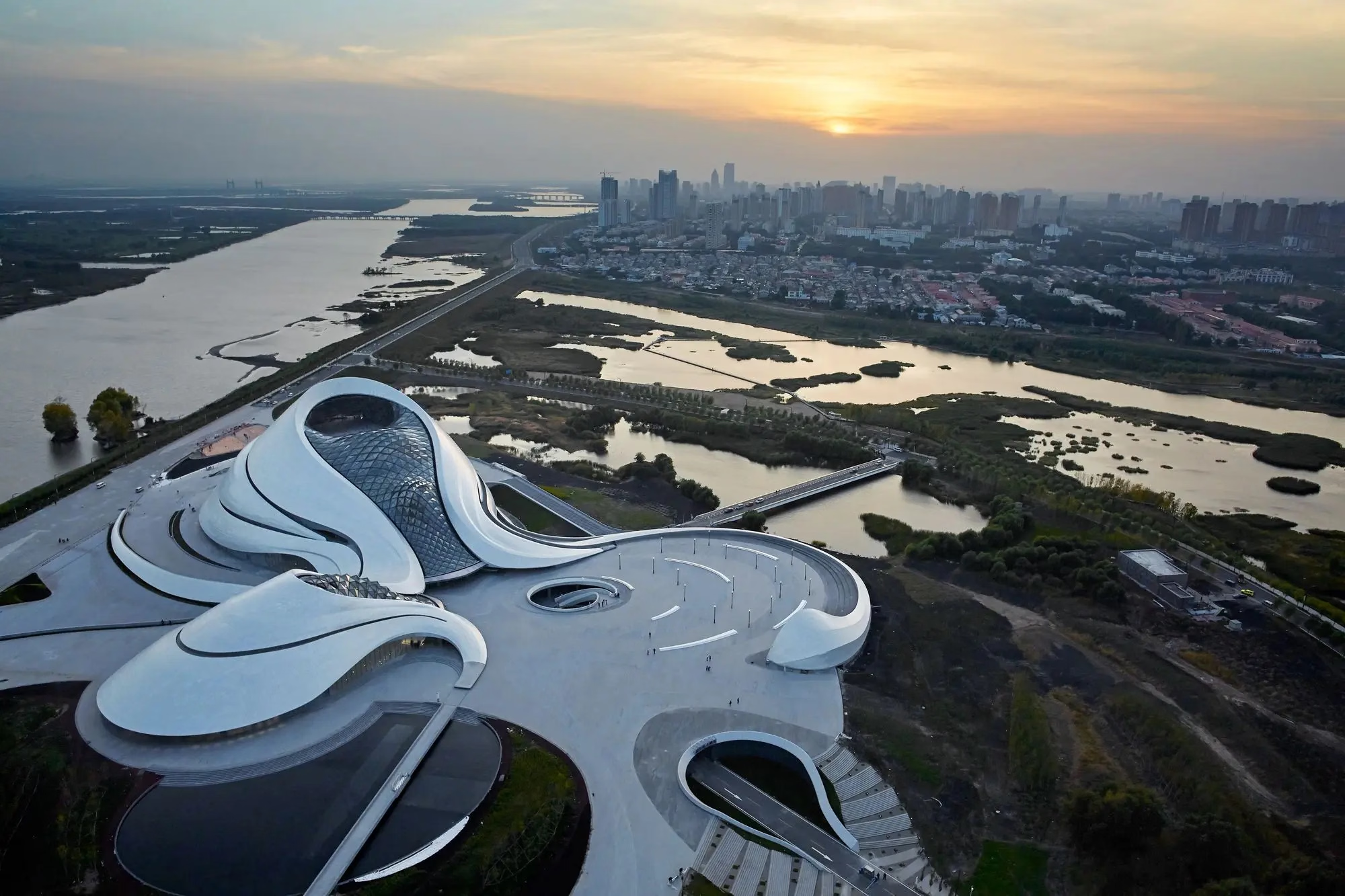
The natural reference is therefore a process rather than a particular organism. Erosion, movement and the shaping of land become a way of thinking about a cultural building. What makes this approach interesting is its sense of continuity. Instead of depending on applied decoration, the design makes the entire outline carry the idea.
Source: https://www.i-mad.com/projects/harbin-opera-house
8. Guangzhou Opera House, Guangzhou, China
Architect: Zaha Hadid / Zaha Hadid Architects | Natural reference: boulders and landforms
Beside Guangzhou’s Pearl River, this opera house brings a geological character to the city. The architectural practice describes its composition as a twin-boulder design. Rather than presenting a conventional symmetrical frontage, the building reads as a pair of related forms. The relationship between them helps organise the approach and connects the cultural complex with its riverside setting.
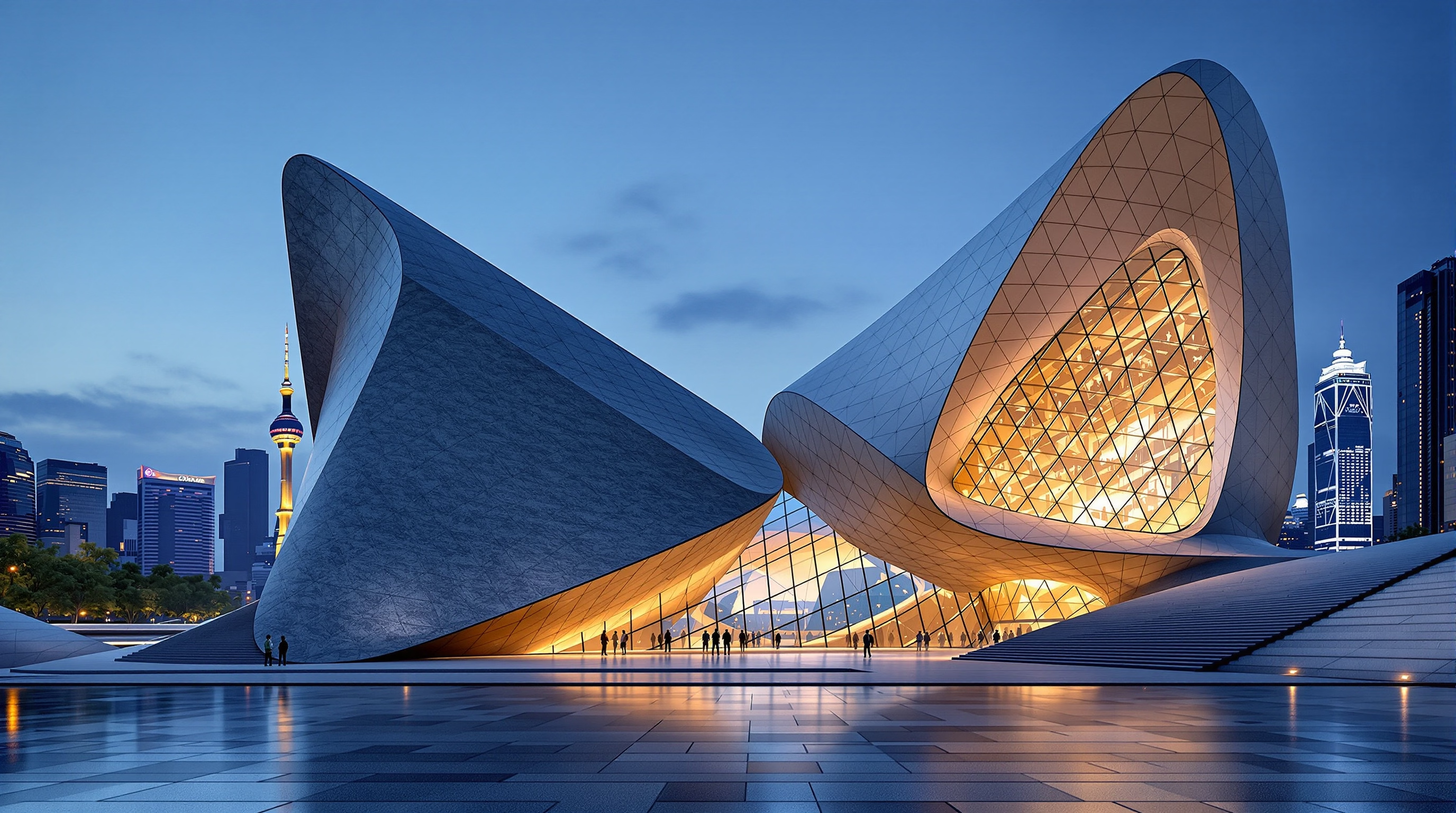
The contrast between a geological reference and precise architectural surfaces is what gives the project its tension. It feels both grounded and deliberately unfamiliar. For anyone interested in sculptural design, it demonstrates how asymmetry can create balance: two forms do not need to match to belong together.
Source: https://www.zaha-hadid.com/architecture/guangzhou-opera-house/
9. National Taichung Theater, Taichung, Taiwan
Architect: Toyo Ito / Toyo Ito & Associates | Natural inspiration: caves and organic spatial forms
The National Taichung Theater takes the relationship with nature inside the building. Its interconnected “sound caves” replace the familiar experience of rooms defined by flat walls and abrupt corners with a sequence of curving spaces. The theatre’s own explanation links Ito’s design to natural forms and the movement of light, air, water and sound.
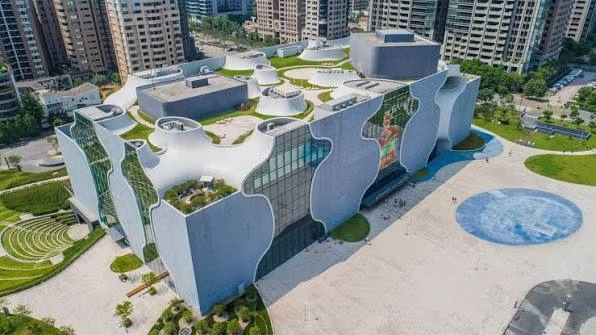
Here, nature offers a model for spatial experience rather than an exterior silhouette. This makes the building especially relevant to interior design. The question becomes how a surface can guide movement, shape a view and change the feeling of a room. Architecture is experienced through the body as much as through photographs.
Source: https://www.npac-ntt.org/en/about/architecture/design
10. Bahá’í Temple of South America, Santiago, Chile
Architect: Siamak Hariri / Hariri Pontarini Architects | Natural reference: leaf-like structural organisation
In the foothills of the Andes, the Bahá’í Temple of South America explores the relationship between curved form and changing light.
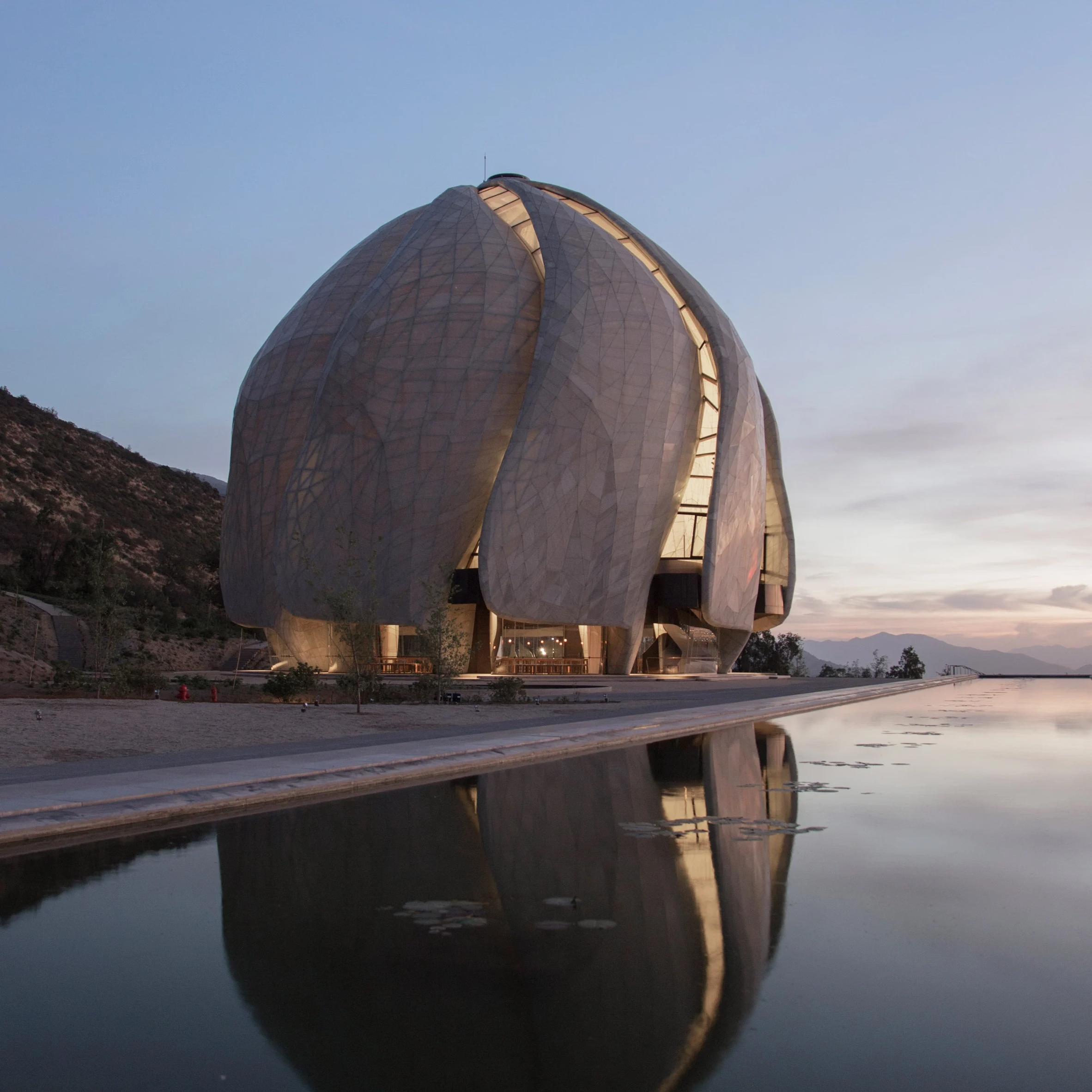
A particularly revealing natural connection appears in the explanation of its design: the supporting members were compared to the stem and veins of a leaf. That analogy offers a way to understand how a flowing architectural surface can also possess an underlying structural order. Descriptions of the completed temple emphasise light passing through glass and touching marble, making illumination central to the experience.
What interests me here is the combination of delicacy and support. As with a leaf, the visible surface and the framework behind it work together to create something that appears lighter than its construction might suggest.
Sources: https://news.bahai.org/story/279/chile-temple-web-site-launched
What nature can teach us about design
These buildings offer very different answers to the same question: what can architecture learn from the natural world?
A flower can suggest a composition. A tree can inform a supporting structure. Wings can inspire movement, while a cave can change the way we imagine an interior. A natural-looking form does not, by itself, establish a building’s environmental performance. That requires separate evidence about its materials, construction, energy use and operation. But nature can still provide a rich starting point for design, shaping how a building looks, works and feels.
The examples I find most compelling invite us to look again at something familiar: a petal, a branch, a fold in the landscape. They remind us how much invention can begin with careful observation.
Which of these buildings would you most like to see in person?