The Enduring Appeal of Organic Modern Bathrooms

Image Credit: Unsplash
Organic modern bathrooms combine simple forms with materials that feel warm, grounded and comfortable. The style favors uncluttered layouts, subtle colors and natural textures, creating a room that looks current without relying on short-lived trends.
Successful organic modern bathroom design also responds well to everyday life. Storage remains practical, surfaces are easy to maintain and lighting supports everything from early morning routines to evening baths. The result can suit a compact powder room as easily as a spacious primary bathroom.
Balance Clean Lines with Natural Warmth
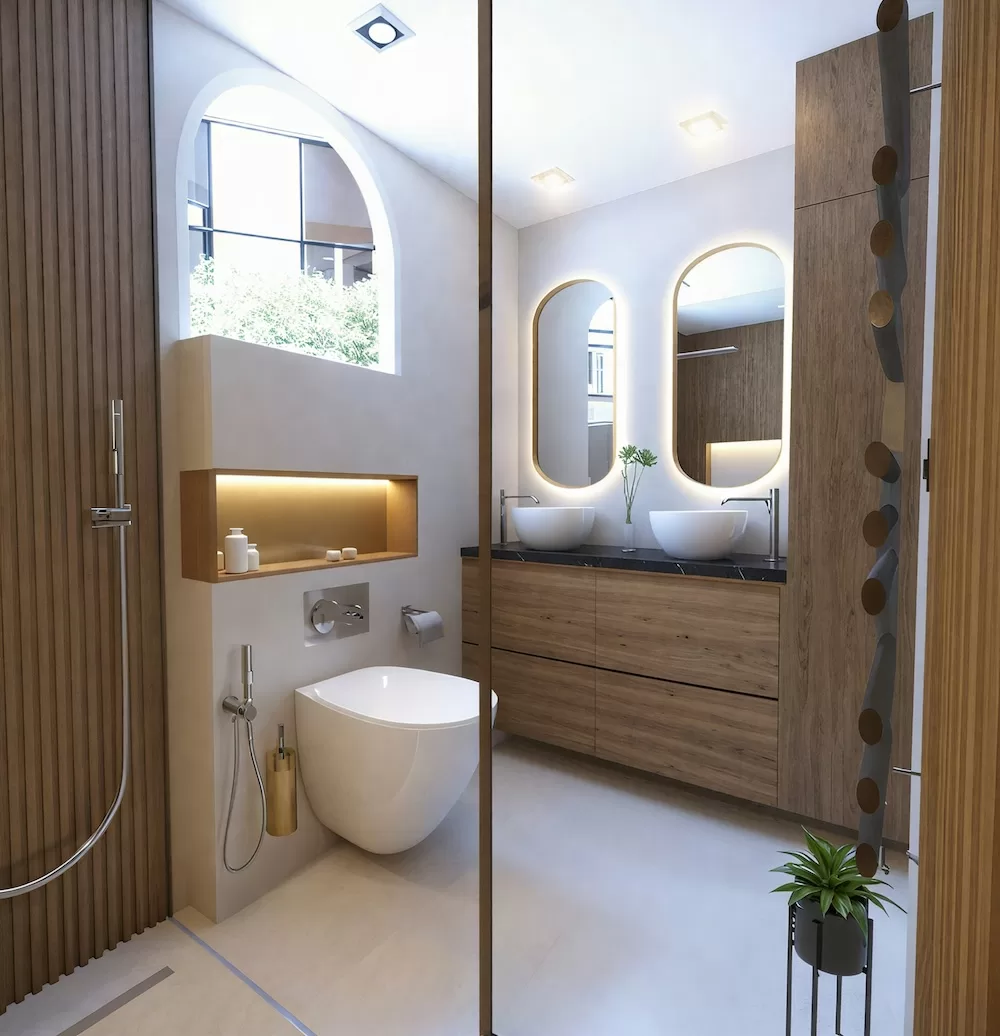
Start with a clear visual framework. A floating vanity, frameless shower enclosure and large-format floor tile establish the modern side of the room while reducing distracting joints and edges. Keep decorative details restrained so the materials have space to stand out.
Natural warmth can come from a woven basket, linen window treatment or softly patterned bath mat. Curved shapes also ease the geometry. Try an arched mirror above a rectangular vanity or a round stool beside a straight-sided bathtub. Limit the main palette to three or four related shades, then repeat them across finishes and textiles. This creates consistency without making the bathroom feel overly coordinated.
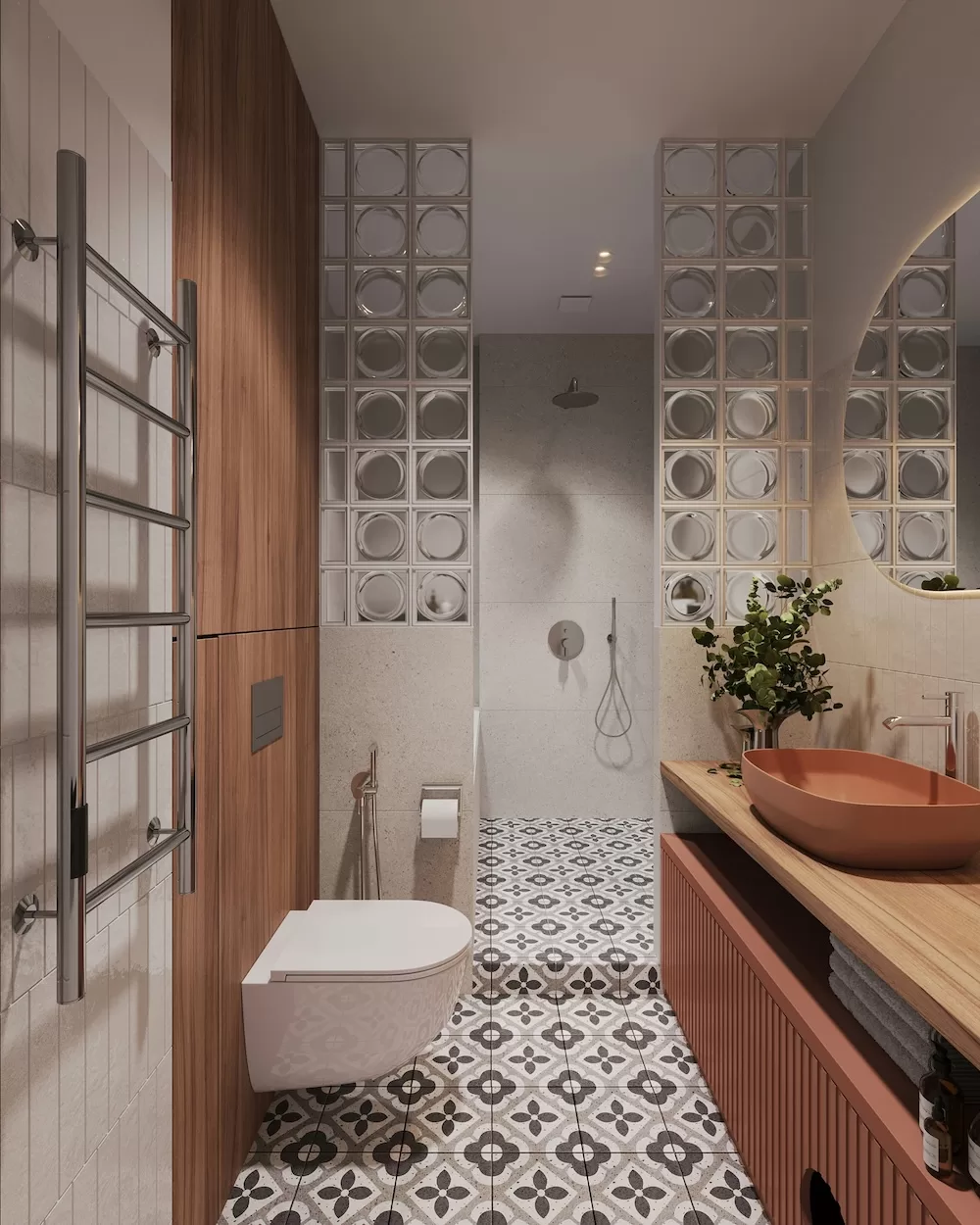
Introduce Tactile Wooden Centerpieces
A wood vanity brings grain, depth and a furniture-like presence to a bathroom filled with hard surfaces. If you’re comparing materials for a renovation, a white oak vanity offers a useful reference point for differences in appearance, durability, moisture resistance and price.
Choose a finish that allows the grain to remain visible, then repeat the wood tone sparingly. A slim shelf or mirror frame is usually enough. Too many matching wooden elements can make the room feel heavy.
Moisture management matters as much as appearance. Use the exhaust fan during bathing and leave it running afterward. Wipe standing water from the countertop, maintain caulk around the sink and follow the vanity maker’s cleaning instructions to protect the finish.
Pair Earthy Tones with Honed Stone
Warm white, sand, mushroom and muted clay give an organic modern bathroom its quiet base. Test samples inside the room at different times of day because beige tile can look gray under cool bulbs while pale stone may develop a yellow cast in strong afternoon light.
Honed stone suits this palette because its low-sheen surface feels soft and understated. Marble, limestone and travertine each vary in porosity and upkeep, so ask for sealing and cleaning guidance before ordering. The same practical considerations apply when using natural stone countertops elsewhere in the home.
For an easier-care option, use porcelain tile that resembles stone. Keep grout close to the tile color and request a full-size sample when possible, since small chips rarely show the complete pattern.
Layer Ambient and Task Lighting
Plan several light sources instead of expecting one ceiling fixture to handle the entire bathroom. Recessed or flush-mount fixtures can provide general illumination, while sconces placed near face level reduce shadows at the mirror. A damp-rated pendant may add warmth over a freestanding tub if local installation requirements and ceiling height allow it.
Look for warm white bulbs around 2700K to 3000K. A high color rendering index helps skin tones, wood finishes and stone surfaces appear more natural. Put ambient fixtures on a dimmer so the room can shift from bright morning light to a softer evening setting. In a shared bathroom, separate switches for mirror, ceiling and shower lighting offer better control without complicating daily use.
Organic modern rooms feel most convincing when every finish supports the same calm atmosphere. Before ordering permanent fixtures, place the wood, stone, tile and paint samples together inside the bathroom. That small test will reveal undertone clashes far more clearly than viewing each material alone.