Redesigning Your Living Room Around an Authentic Fireplace

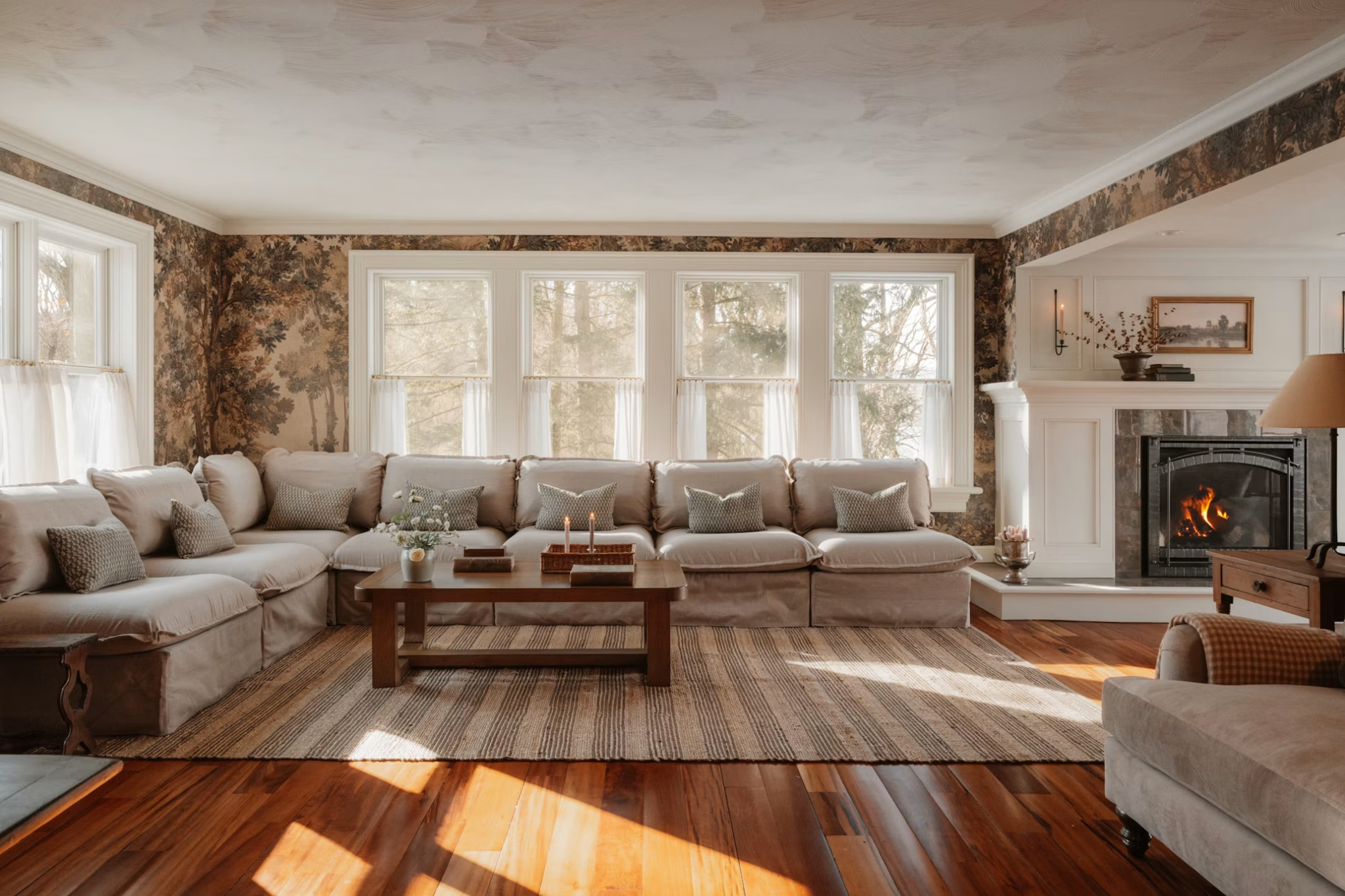
Image Credit: Unsplash
An authentic fireplace gives a living room a natural focal point, but the room still needs to function comfortably around it. Furniture scale, heat-safe materials, masonry condition, and lighting all affect the finished result. Before selecting paint or ordering a new sofa, inspect what you already have and note the fireplace’s proportions. A thoughtful redesign can preserve original brickwork while making the space feel brighter, more practical, and connected to the rest of your home.
Mix Modern Furniture with Classic Brick
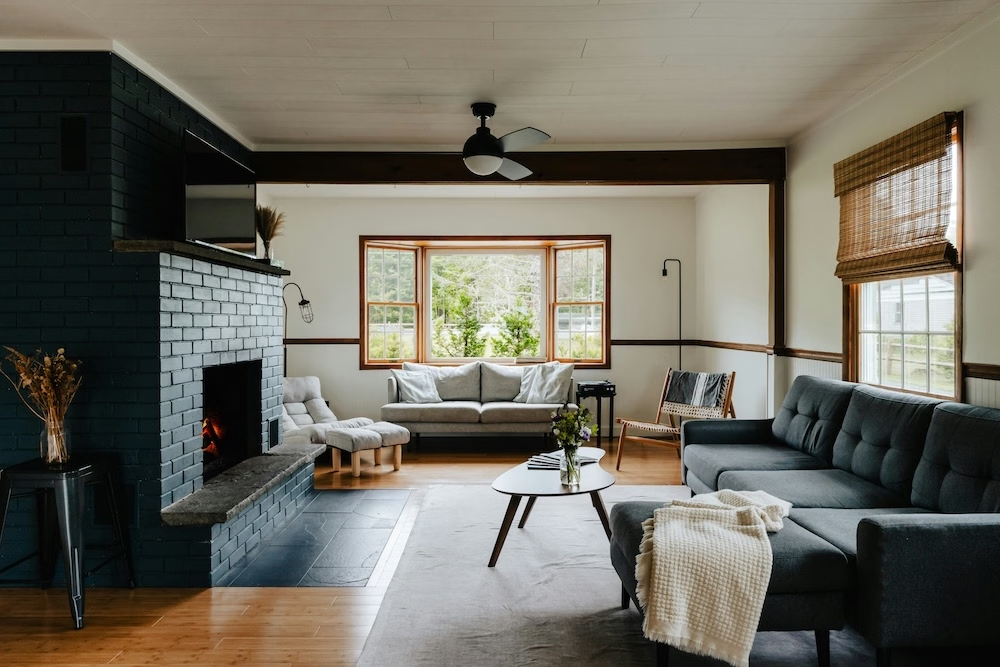
Original brick brings texture and history to a room, so give it enough visual space to stand out. Start with a simple furniture plan that keeps the fireplace visible from the main seating area. In many rooms, placing a sofa parallel to the hearth and adding two lighter chairs at an angle creates a conversational layout without blocking the focal point.
Choose modern furniture with clean lines and restrained colors. A low-profile cream sofa, slim oak coffee table, and black metal floor lamp can balance red or brown brick without competing with it. If the brick has cooler gray tones, consider upholstery in warm beige, muted green, or soft rust. Pulling one subtle shade from the masonry into cushions or a rug helps the room feel coordinated.
Scale matters as much as color. Leave enough open floor area in front of the hearth to comply with the appliance manufacturer’s guidance and local requirements. Avoid oversized sectionals that crowd the fireplace wall or force people to walk too close to the hearth.
Before buying anything, mark the dimensions of proposed furniture on the floor with painter’s tape. This quick test reveals blocked paths and awkward gaps. You can also review these fireplace design ideas to compare how different furniture profiles work with traditional surrounds. For more help coordinating tables, seating, and storage, these stylish furniture pieces offer useful inspiration.
Choose Safe and Stylish Mantels
A mantel should suit the scale of the fireplace and leave room for safe clearances. Its required height and projection depend on the fireplace design, surrounding materials, and applicable building rules. Confirm those details before ordering a shelf or attaching wood trim. A qualified professional can check conditions on site if the opening, surround, or existing mantel has been altered over time.
Homeowners in Waltham and the greater Boston area can arrange chimney sweep and repair services when the redesign reveals cracked masonry, a damaged crown, or concerns about the liner. It makes sense to address those conditions before installing decorative finishes that could conceal access points or need to be removed later.
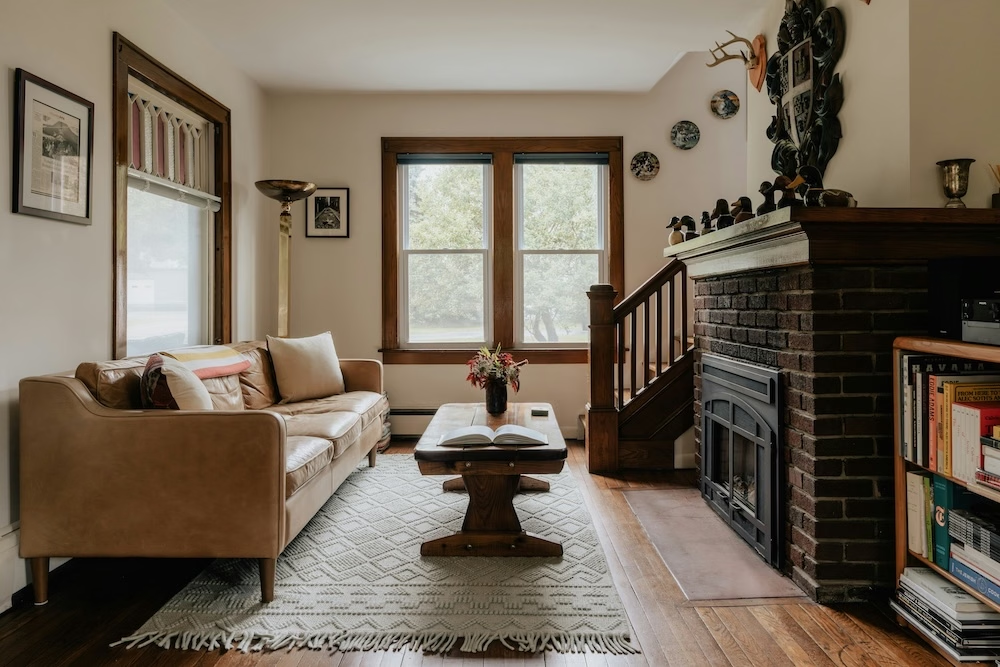
For style, match the mantel’s visual weight to the room. A thick reclaimed-wood beam works well above broad brickwork in a casual interior, while a narrow stone shelf suits a more tailored space. Painted wood can connect the fireplace to wall trim or built-in cabinetry, though any material close to the opening must meet clearance requirements.
Keep mantel decor edited. One large artwork, a low ceramic vessel, and a small sculptural object often look more balanced than a row of tiny accessories. Secure mirrors and framed pieces properly instead of leaning them where heat or movement could shift them. The possibilities shown in these fireplace update ideas can help you compare mantel materials and surround treatments before committing to permanent changes.
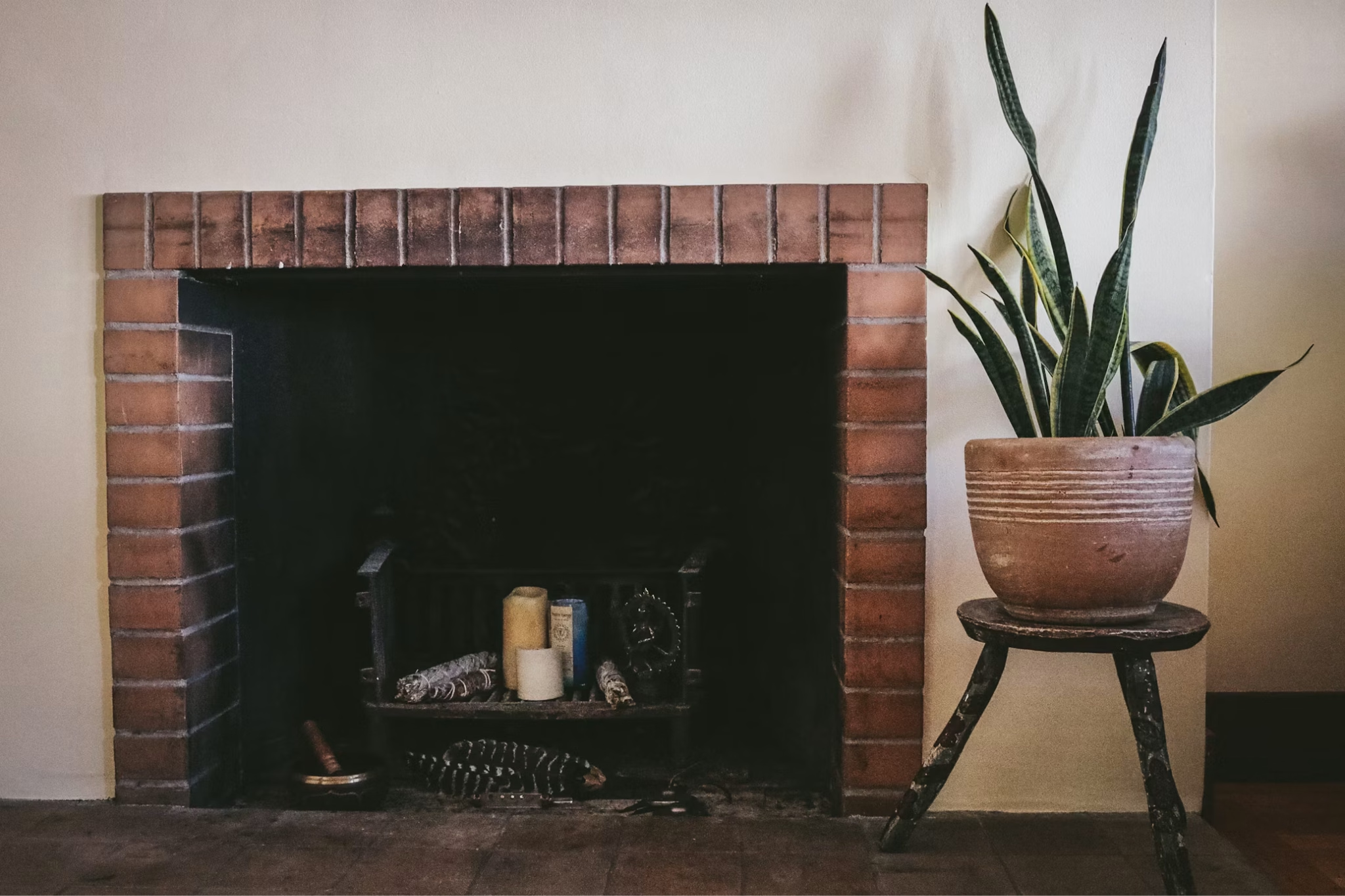
Image Credit: Unsplash
Prioritize Proper Flue and Masonry Care
Decorating should begin only after the working parts of the fireplace have been assessed. Check the visible masonry for loose mortar, white powdery deposits, staining, and cracked bricks. Indoors, persistent smoky odors or dark marks around the opening may signal a drafting or maintenance issue. Outside, damaged mortar joints, a deteriorating crown, or a missing cap can allow moisture into the structure.
Schedule an inspection before using a fireplace that has sat idle, especially when you’ve recently purchased the home and don’t know its maintenance history. The same applies after a major storm, a roof project, or visible water intrusion. A professional can evaluate the flue, liner, damper, and accessible masonry, then explain which repairs should come first.
Moisture deserves particular attention because repeated wetting and drying can weaken masonry. Don’t cover stained brick with paint until the source has been identified. Fresh paint may briefly hide discoloration while trapping moisture or making future repairs harder. Once the masonry is sound and dry, choose a finish intended for the surface and conditions.
Plan messy work before new flooring, upholstery, or built-ins arrive. Masonry repairs can release dust and may require access around the full hearth. Protect nearby surfaces and keep the area clear until the work is finished. If the fireplace needs extensive changes, browse a fireplace inspiration gallery to clarify your preferred look, then discuss what is practical for the existing structure with qualified professionals.
Layer Lighting for Evening Ambiance
A fireplace may provide a warm glow, but it can’t light the whole living room. Use several sources at different heights so the room remains comfortable for reading, conversation, and everyday tasks. Start with soft ambient light from a dimmable ceiling fixture or recessed lights. Add floor lamps beside chairs and table lamps near the sofa to place useful light where people need it.
Keep strong overhead beams from pointing directly at glossy brick or glass, which can produce distracting reflections. Wall sconces on either side of the fireplace can frame it beautifully, though their size and mounting height should relate to the mantel. In a room with an eight-foot ceiling, compact sconces often feel more balanced than tall fixtures with large shades.
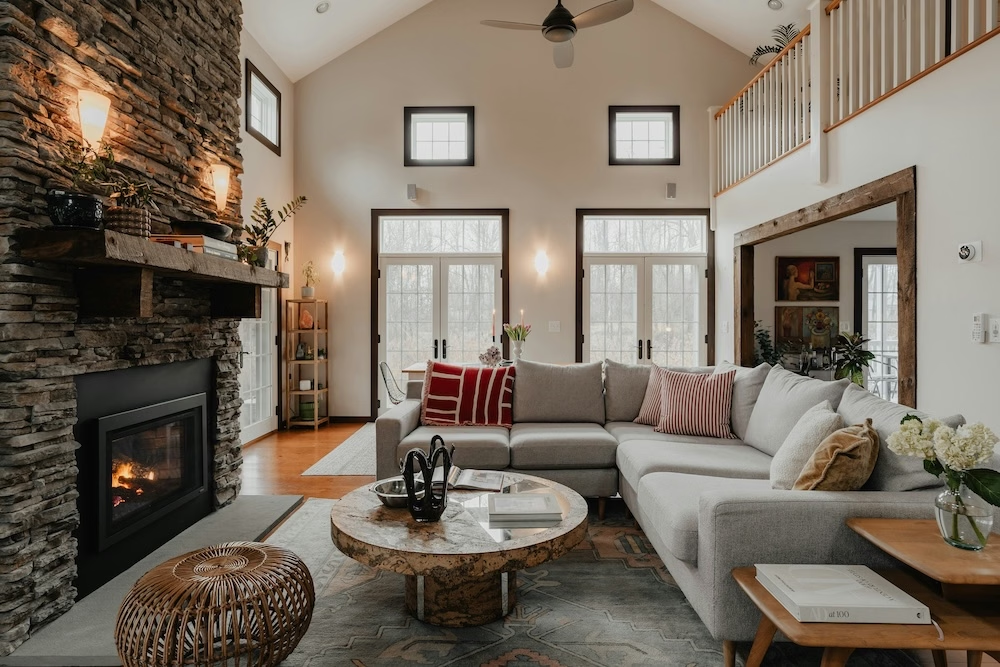
Choose bulbs with a consistent color temperature. Warm white light around 2700K usually complements brick, timber, and neutral textiles. Mixing cool white ceiling bulbs with very warm lamps can make the room look disjointed. Dimmers provide an easy way to adjust brightness as natural light fades, and they’re especially useful when the fireplace is already contributing light.
Use the mantel sparingly as a lighting surface. Battery-operated accent lights can highlight artwork without loose cords, but keep all decorative items away from heat and follow manufacturer guidance. For examples of balanced arrangements, these fireplace living room ideas show how lamps, seating, and artwork can support the focal point.
Once the practical work is complete, test the room after sunset. Sit in each chair, turn lights on in different combinations, and check that the mantel does not cast harsh shadows. That final evening test often reveals the one lamp adjustment that makes an authentic fireplace feel fully at home.