How to Open a Jewelry Store in 2026: Real Costs and Lessons From a Boutique Owner

Thinking about opening your own jewelry boutique? From choosing the right location and managing inventory to creating a luxurious shopping experience, here are the lessons I’ve learned from running my own jewelry store in Marbella, Spain.
Opening a jewelry boutique sounds like a dream for anyone passionate about beautiful things. Imagine spending your days surrounded by gemstones, pearls, and carefully curated collections, meeting interesting people, and helping customers find something special.
But behind the beautiful displays and sparkling jewelry lies a business that requires careful planning, financial discipline, creativity, and a good understanding of your customers. When I opened L’Essenziale Jewelry in Marbella’s Old Town in 2019, I had no idea how much I would learn about retail.
Seven years later, our boutique has grown from a small collection of relatively simple jewelry into an established designer jewelry business, with handmade gemstone pieces, natural pearls, and customers visiting us from around the world.Along the way, I’ve made mistakes, experimented with different approaches, opened another retail location that ultimately didn’t succeed, and discovered what really makes a small jewelry boutique profitable.
In this guide, I want to share those experiences. Not abstract business advice, but practical lessons from someone who has actually opened, designed, stocked, and operated a jewelry boutique.
Whether you’re planning to sell handmade jewelry, fine jewelry, or carefully selected pieces from suppliers, I hope these insights will help you avoid some expensive mistakes.
1. Choosing the Right Location: Foot Traffic Isn’t Everything
If there’s one decision that can determine the future of your jewelry boutique before you even open its doors, it’s the location. When we started searching for commercial premises in Marbella in 2019, finding a suitable space wasn’t easy. The previous year had been particularly successful for many local businesses, and relatively few shops were available to rent.
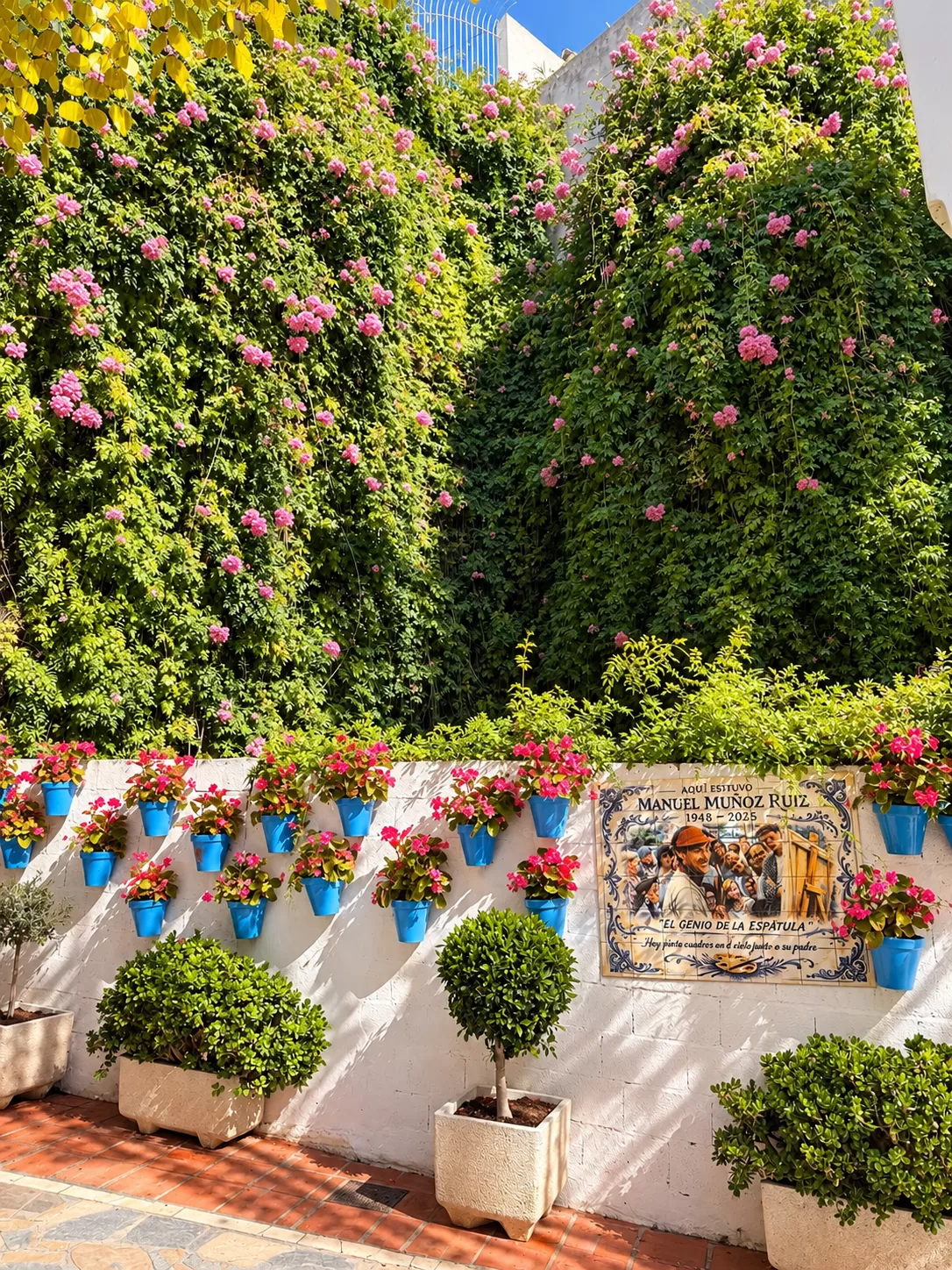
Eventually, we found a small commercial space in Marbella’s charming Old Town. It wasn’t on one of the busiest shopping streets. In fact, compared with the prime locations nearby, I estimate that we received approximately three times less pedestrian traffic.
At the time, we didn’t have many alternatives. But looking back, I understand just how much the location influences a jewelry store’s sales potential.
Look for the Right Kind of Foot Traffic
One of the biggest mistakes you can make when choosing a retail location is assuming that more pedestrians automatically mean more customers.
For jewelry, the quality of foot traffic matters enormously.
In Marbella’s Old Town, for example, some streets are surrounded by elegant restaurants, fashionable boutiques, art galleries, and upscale hotels. Others have mainly inexpensive tapas bars and casual restaurants. Both types of streets may be busy, but the visitors often have different shopping habits and spending priorities.
For a boutique selling jewelry with an average purchase of approximately €200–€500, I would generally prefer a street surrounded by businesses that attract customers comfortable spending money on discretionary purchases.
People visiting a beautiful restaurant for dinner may enjoy browsing jewelry boutiques before or after their meal. The same applies to customers visiting designer clothing stores or art galleries. These businesses help create an environment where purchasing something beautiful feels natural.
My advice: When searching for a jewelry boutique location, look beyond pedestrian numbers. Study the surrounding businesses and ask whether their customers are also likely to be yours.
Pedestrian Streets Are Particularly Valuable
Another detail I would pay attention to is whether the street is pedestrianized. Some streets in Marbella’s Old Town allow vehicle traffic. Even when these streets have plenty of pedestrians, people often walk quickly or concentrate on navigating around cars. On pedestrian-only streets, visitors are generally more relaxed. They stroll, look at shop windows, stop to admire displays, and are more likely to enter a boutique spontaneously. For a business that depends partly on impulse purchases, this difference can be significant.
Is Paying More Rent for a Better Location Worth It?
When we opened our Marbella boutique, our rent was approximately €1,200 per month, plus 21% VAT. At that time, a comparable commercial space on one of the best streets could cost approximately €2,000 per month.
The difference seemed substantial. However, knowing what I know today, I would seriously consider paying more for a prime location.
If a better street brings significantly more qualified customers, the additional rent may be recovered through increased sales. Of course, this isn’t guaranteed. You should always calculate how many additional purchases you would need to cover the higher rent. But I wouldn’t automatically choose a cheaper location simply to reduce monthly expenses. Sometimes a more expensive location is actually the better business decision.
2. Choosing the Right Town Is Just as Important as Choosing the Right Street
A few years after opening L’Essenziale Jewelry, we decided to open another shop in Fuengirola, a coastal town not far from Marbella. The boutique was primarily intended for our beachwear business, but I also dedicated one display cabinet to jewelry from L’Essenziale. Unfortunately, the jewelry barely sold.
Eventually, we decided to close the shop because the business wasn’t performing as expected. What made this experience particularly interesting was that the location itself seemed excellent.
We were on one of Fuengirola’s main commercial streets, paying approximately €1,200 per month in rent — almost the same as our Marbella boutique. Yet the results were completely different.
Understand Your Local Customer
Fuengirola is a lively town with many residents and visitors.However, its customer profile differs from Marbella’s. Marbella has developed an international reputation as a luxury destination, attracting affluent tourists, second-home owners, and residents who are often interested in fashion, art, jewelry, and premium experiences. Fuengirola has a broader market with different spending patterns.
In our particular location, we struggled to attract enough customers willing to spend €200 – €300 on jewelry. This doesn’t mean a jewelry store cannot succeed in Fuengirola. A different concept, product range, or price point might work extremely well. But our experience taught me an important lesson.
I would rather have a boutique on a quieter street in a town that attracts my ideal customers than on the busiest street in a town where my products don’t match local demand.
Before signing a lease, research the town, its neighborhoods, tourism patterns, and purchasing power. Visit competing boutiques and observe what customers are buying. Choosing the right market comes before choosing the right street.
3. Understand the Real Cost of Renting a Commercial Space
When calculating the cost of opening a jewelry store, don’t assume that you only need enough money for your first month’s rent. Commercial leases often require substantial upfront payments.
When we rented our Marbella boutique, we needed approximately three months of rent available initially: two months as a security deposit and the first month’s rent. Some landlords may request additional guarantees, particularly when you’re opening a new business without an established financial history. I’ve encountered situations where landlords wanted guarantees equivalent to several months of rent. The legality and structure of these requirements depend on local regulations and the type of lease, so always have the contract reviewed before signing.
Be Careful With Traspaso Fees in Spain
If you’re opening a boutique in Spain, you may encounter the term traspaso. This generally refers to transferring an existing business or certain associated rights and assets to a new operator, often in exchange for a payment. Such arrangements can make sense when you’re acquiring a functioning business with valuable equipment, established customers, or other genuine commercial benefits. For example, taking over an established restaurant with its equipment and customer base may justify a substantial transfer payment. But if you’re simply planning to open your own jewelry boutique in an empty commercial space, I would be very cautious about paying a large traspaso fee.=
Keep Enough Savings to Survive the First Months
My recommendation is to have enough financial reserves to cover at least six months of rent, in addition to your other startup expenses. Ideally, having enough reserves for a full year would provide even greater security. A new boutique may take time to attract regular customers. You might open during a slow season, experience unexpected renovation delays, or discover that your initial sales projections were too optimistic.
Financial reserves allow you to make decisions calmly instead of feeling pressured to generate immediate profits. Remember that rent is only one part of your operating expenses. You also need to budget for utilities, insurance, accounting, staffing, inventory, and other costs.
4. How Much Does It Cost to Open a Jewelry Store?
The answer depends enormously on your concept. A small boutique selling handmade silver and gemstone jewelry requires a very different investment from a fine-jewelry store carrying expensive diamonds and solid gold collections. To give you a realistic example, here are some of the main expenses from our experience opening L’Essenziale Jewelry in Marbella.
| Expense | Our approximate cost |
| Initial jewelry inventory | €20,000 |
| Boutique renovation work | €20,000 |
| Monthly rent | €1,200 + VAT |
| Initial rental payments | Approximately three months’ rent |
| Statement chandelier | Approximately €7,000 |
The chandelier was one of our major design purchases; its cost should not be added to the renovation total without first confirming how the original budget was allocated. These figures are historical examples from 2019, not current quotations or a complete startup budget.
Additional expenses may include permits, professional fees, insurance, security, packaging, equipment, and working capital. Your actual investment could be substantially higher or lower. Like in our case we spent about 1000 Euro to get project from the architect to get the license for the shop.
One thing that might surprise you is that we invested more in creating the boutique environment than in our initial jewelry inventory. And looking back, I believe that decision played an important role in establishing our brand.
5. Designing a Jewelry Boutique: Create an Experience, Not Just a Shop
Jewelry isn’t a necessity. People don’t purchase a gemstone necklace or a beautiful pair of earrings because they need them to survive. They buy jewelry because it makes them feel something. Perhaps it reminds them of a special holiday, celebrates an important occasion, or simply makes them feel beautiful.
That’s why I believe the environment in which you sell jewelry is extremely important. When we first rented our Marbella premises, the interior looked nothing like the boutique I had imagined.
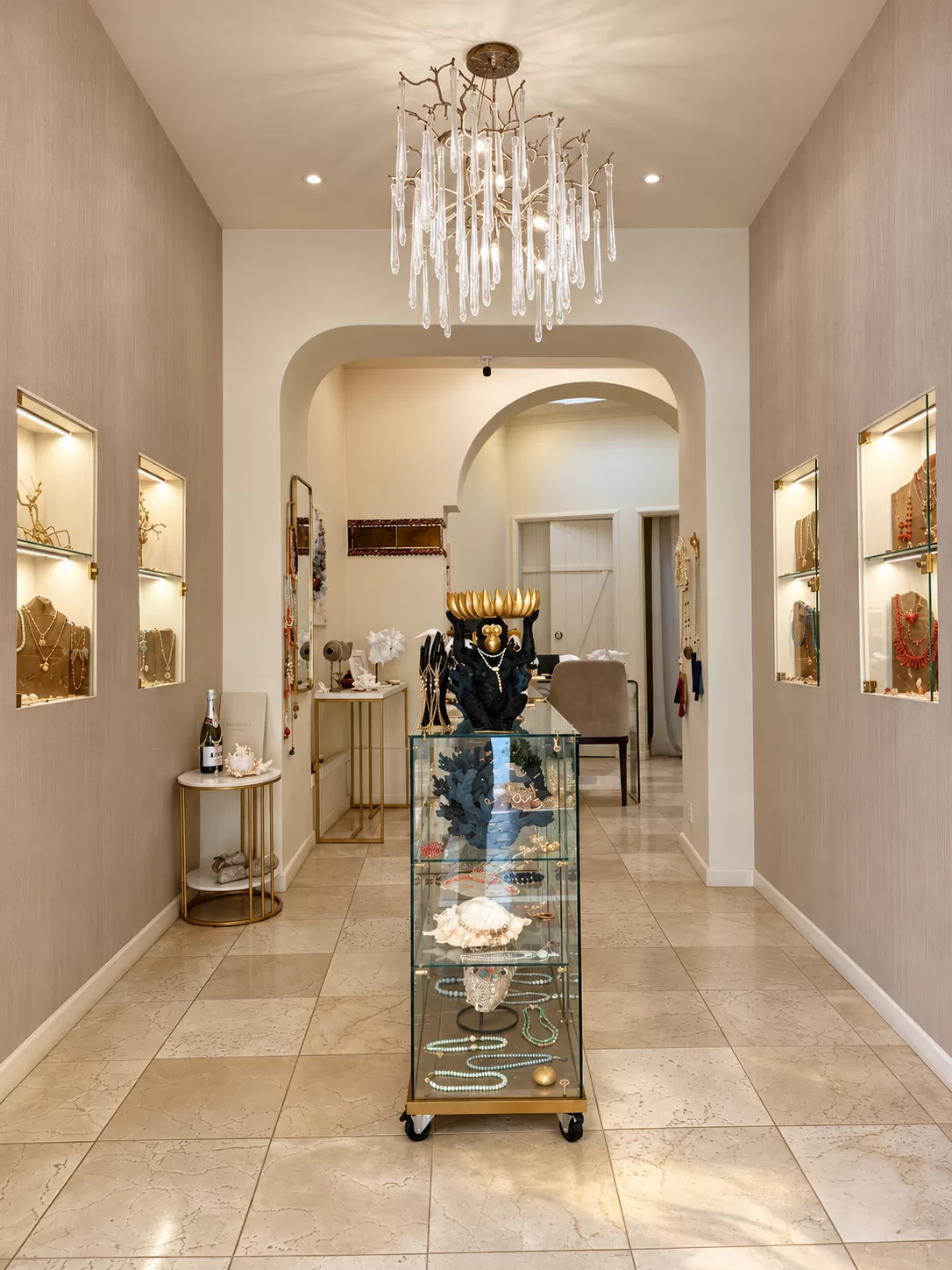
I decided to transform it. We installed marble flooring, created decorative wall niches, introduced new lighting, and selected warm, sophisticated materials. Our palette included soft beige tones, marble, and gold accents. I wanted customers to feel that they were entering a luxurious space, even though many of our pieces were relatively accessible compared with traditional fine jewelry.
Invest in One Memorable Feature
One of our biggest purchases was a spectacular chandelier costing approximately €7,000. It was a significant investment for a small boutique. But it became one of the most recognizable features of our shop. The chandelier immediately establishes a sense of luxury and makes the space memorable.
I believe that a single extraordinary design feature can sometimes have a greater impact than spending money on dozens of expensive decorative details. It might be an unusual chandelier, a sculptural display counter, a beautiful piece of art, or a distinctive architectural element. The important thing is to create an atmosphere that reflects your brand.
Our renovation investment has, in my view, paid off many times over through the years. Although I cannot isolate exactly how much additional revenue the interior generated, I strongly believe that the boutique’s appearance has contributed to our sales.
Never Compromise on Jewelry Lighting
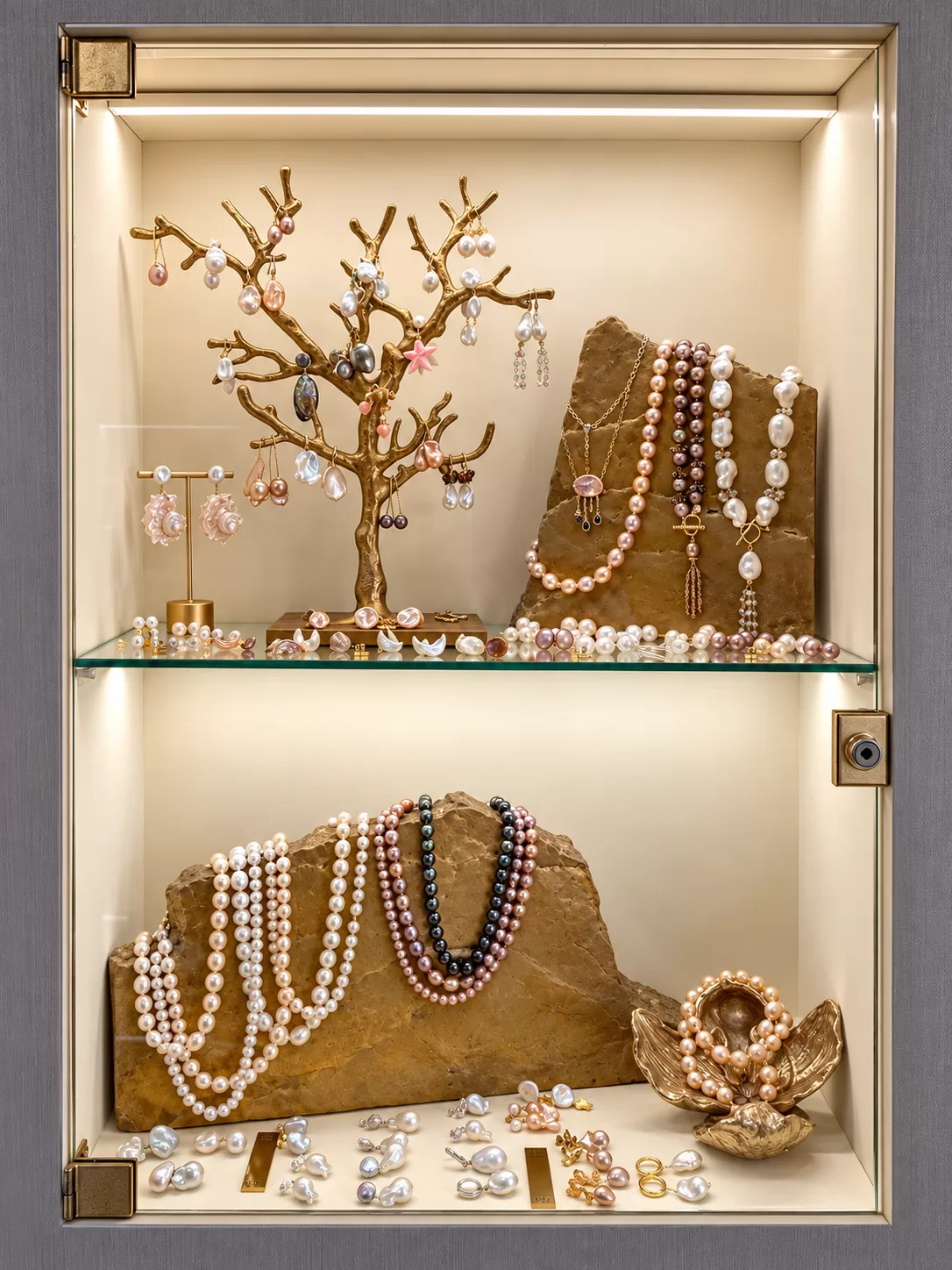
If there’s one practical element where I wouldn’t recommend cutting corners, it’s lighting. Jewelry needs to be illuminated properly. At L’Essenziale, every wall niche displaying jewelry has integrated LED lighting. We also use additional spotlights to highlight individual collections and gemstones. Good lighting makes precious metals sparkle and helps reveal the natural beauty of gemstones.
When planning your renovation, ask your electrician to provide plenty of electrical connection points around display cabinets and niches. It’s much easier to install these during renovation than to add them afterward. Choose lighting with accurate color rendering so that gemstones and pearls appear beautiful without their colors being distorted.
In a jewelry boutique, lighting isn’t simply decoration. It’s an essential selling tool.
Be Creative With Your Jewelry Displays
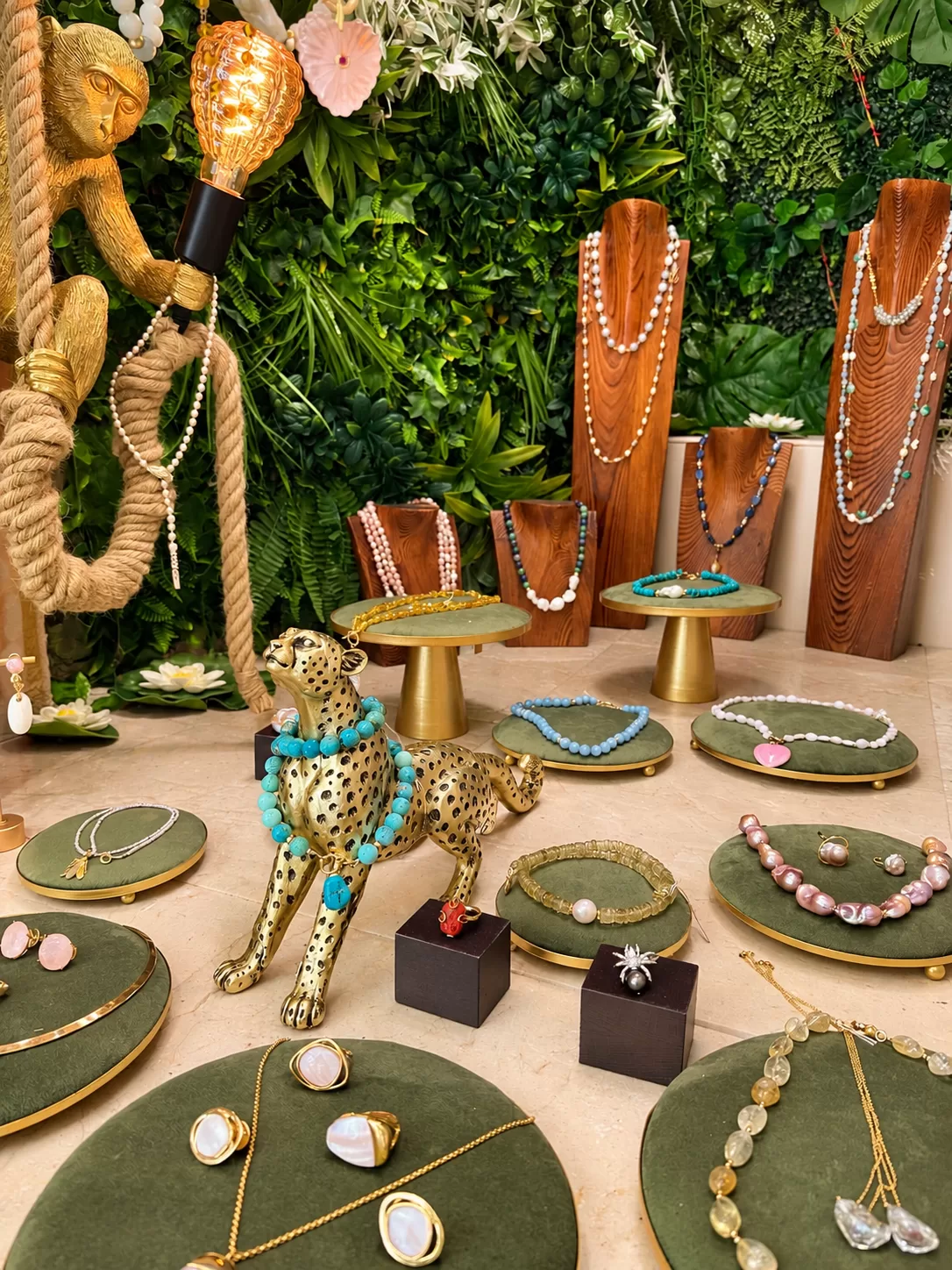
Although we invested in some expensive interior features, we also found ways to save money. Instead of purchasing numerous conventional jewelry stands, I created unusual displays using marble elements and gold-painted finishes. We still use many of these displays today. They look more like small sculptures than ordinary commercial jewelry holders.
I believe every jewelry boutique owner can find creative solutions that make their displays distinctive without spending excessively. You could experiment with natural stone, ceramics, vintage objects, wood, or custom-made platforms. he goal is to create a visual identity that customers remember.
Your Shop Window Should Tell a Story
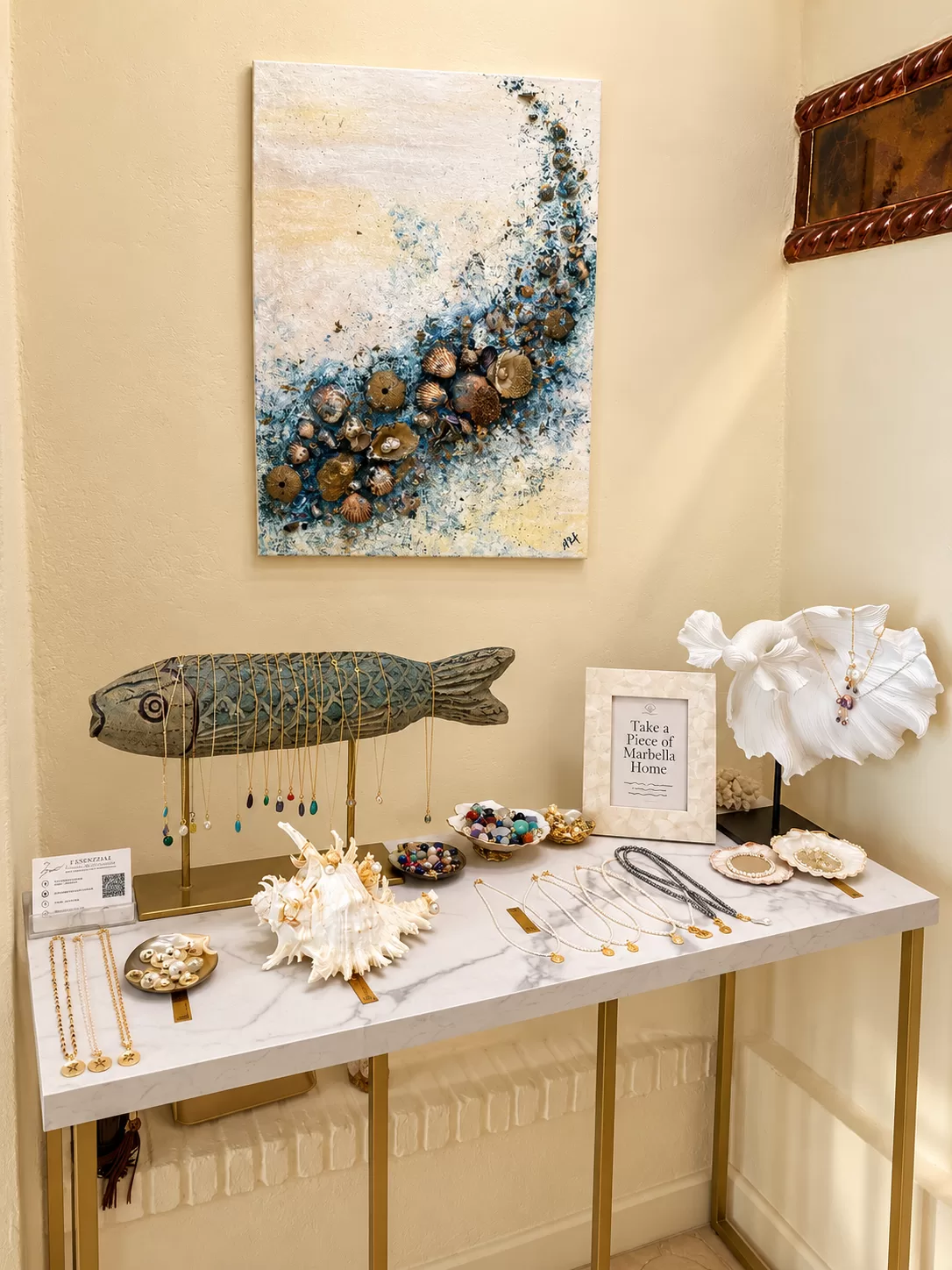
We also approach our window displays as creative installations rather than simply arranging jewelry on stands. One year, we created an underwater theme using shells, marine elements, and treasure-inspired decorations. The jewelry appeared almost like precious objects discovered in a pirate’s treasure chest.
Another year, we created a jungle-inspired window with lush foliage and golden animal sculptures that also served as jewelry displays. We regularly change our themes to keep the boutique interesting. But the most important lesson I’ve learned about window displays is this:
The primary purpose of a shop window isn’t necessarily to sell the jewelry displayed inside it. It’s to make people curious enough to enter the boutique.
Once they’re inside, you have an opportunity to introduce them to your entire collection. Window merchandising deserves its own detailed guide, but even a small boutique can benefit enormously from creative storytelling.
6. How Much Jewelry Inventory Do You Need to Start?
When we opened L’Essenziale in 2019, our initial investment in jewelry stock was approximately €20,000.= We started with a relatively small collection.
Much of our initial inventory consisted of gemstone beads that I used to create simple necklaces, along with affordable sterling silver jewelry from a Spanish supplier. That supplier turned out to be particularly important. The jewelry was attractive, relatively inexpensive to purchase, and allowed us to sell certain pieces at approximately four to five times their wholesale cost. Those accessible products helped us survive our first year.
Don’t Invest All Your Money in Expensive Pieces
One of the biggest mistakes a new jewelry boutique owner can make is purchasing too much inventory before understanding what customers actually want. It’s tempting to fill every display with beautiful pieces. But jewelry that doesn’t sell represents money that you cannot use elsewhere. Our approach was to begin with a modest selection and gradually expand it.
During the first year, we reinvested most of the money we earned into the business. By the end of that year, the boutique had become financially sustainable: we could cover the rent, purchase additional stock, and begin generating income for ourselves.
Keep Your Inventory Moving
One of my strongest principles is to avoid tying up money in products that simply sit in storage. Imagine purchasing 100 necklace clasps when you only need ten. The remaining 90 clasps may eventually be useful, but in the meantime, that money is unavailable for other purchases. I’d rather buy ten, use them, and reorder when necessary.
The same principle applies to finished jewelry. If certain designs are selling consistently, replenish them. If something isn’t selling, think carefully before purchasing more. Of course, maintaining some reserve stock is necessary, particularly when suppliers have long delivery times. But the goal should be to balance availability with cash flow.
Your inventory should support your sales, not consume all your available capital.
7. Finding Jewelry Suppliers and Creating Your Own Collection
There are several ways to build a jewelry boutique. You can design and manufacture your own jewelry, collaborate with artisans, purchase finished pieces from wholesalers, or combine these approaches.
At L’Essenziale, we use a combination. Most of our jewelry is handmade, including pieces I create myself and designs produced for us by other makers. We also purchase selected everyday jewelry from suppliers.
Learn Basic Jewelry-Making Skills
One of the most valuable things I did after opening the boutique was learning how to make jewelry myself. I learned how to knot pearl necklaces and assemble gemstone bead necklaces. Today, I make our beaded necklaces myself. This saves a considerable amount of money.
Of course, your own time also has value and should be considered when calculating profitability.But when you’re starting with limited capital, learning basic techniques can significantly reduce the amount of cash you need to spend on external production.
Customization Is a Competitive Advantage
There’s another important benefit. Imagine a customer falls in love with a pearl necklace but wants it slightly shorter. Because I know how to make the necklace myself, I can often adjust it immediately. I can change the length, replace a clasp, or modify certain details. If I depended entirely on external makers, even a small adjustment could require additional labor costs and waiting time. And I believe this personal service is one of the advantages that independent designer boutiques have over larger retailers.
8. How to Price Jewelry Profitably
Pricing is one of the most important aspects of running a successful jewelry business. And one thing I’ve learned is that different types of jewelry may require different markups.
At L’Essenziale, our pricing depends on the materials, production costs, design, and the price customers are willing to pay.
Expensive Jewelry Often Has a Lower Markup Multiple
For example, when working with expensive gemstones or precious materials, the material costs may already be substantial. If I multiplied those costs by five, the final price could become too high for our target customers. For some expensive pieces, I therefore use a markup of approximately three times the relevant cost. For medium-priced jewelry, I may use a multiple closer to five times cost. And occasionally, certain inexpensive accessories can support much higher markup multiples. For example, an item costing €1 might sell for €35 if customers appreciate its design and perceive it as good value. That represents a 35-times selling-price multiple, not a 35-times profit margin.
Why Different Markups Matter
A small inexpensive item can sometimes generate a very high percentage return, but relatively little profit in euros.
An expensive necklace may have a lower percentage markup while generating a much larger gross profit per sale.
For example:
| Product | Cost | Selling price | Gross profit before overhead |
| Small accessory | €1 | €20 | €19 |
| Medium-priced jewelry | €30 | €150 | €120 |
| Premium jewelry | €200 | €600 | €400 |
These are simplified examples, not our actual product accounts.
They also exclude expenses such as packaging, payment fees, taxes, rent, and other operating costs. The important thing is to balance your assortment.
Affordable items can generate frequent sales, while more expensive pieces can contribute substantially to revenue and gross profit. I wouldn’t recommend applying one universal markup to every product.
Instead, calculate your true costs and consider your market positioning. A successful jewelry boutique needs both attractive products and a pricing strategy that supports the business.
9. How to Sell Jewelry: Create an Experience, Not Pressure
One of the biggest lessons I’ve learned is that selling jewelry is different from selling many everyday products. Jewelry purchases are often emotional. Customers may fall in love with a piece, but they also want to feel comfortable, confident, and appreciated.
Always Greet Customers, but Don’t Be Pushy
When someone enters our boutique, I always acknowledge them. I usually stand up, greet them warmly, and then give them space to explore. I don’t immediately ask whether they need help. Instead, I remain available while allowing them to browse at their own pace.
I observe their reactions. Perhaps someone points out a necklace to their partner. Maybe they lean closer to examine a gemstone or put on their glasses to see a piece more clearly. That’s usually when I approach and say something simple: “Would you like to see it closer?” This feels much more natural than immediately trying to sell something. The customer has already demonstrated interest, and I’m simply offering to help.
Encourage Customers to Try Jewelry On
I believe trying jewelry on is one of the most important moments in the selling process. A necklace may look beautiful in a display, but the customer needs to see how it looks against her skin. We have large mirrors, smaller mirrors, and portable mirrors available. Sometimes I even suggest stepping outside the boutique to see how a gemstone looks in natural daylight. The difference can be remarkable. Certain stones reveal beautiful colors and reflections in sunlight that are less noticeable under artificial lighting. This becomes part of the experience. The customer isn’t simply looking at jewelry anymore. She’s discovering how it looks and feels when she wears it.
Make the Experience Memorable
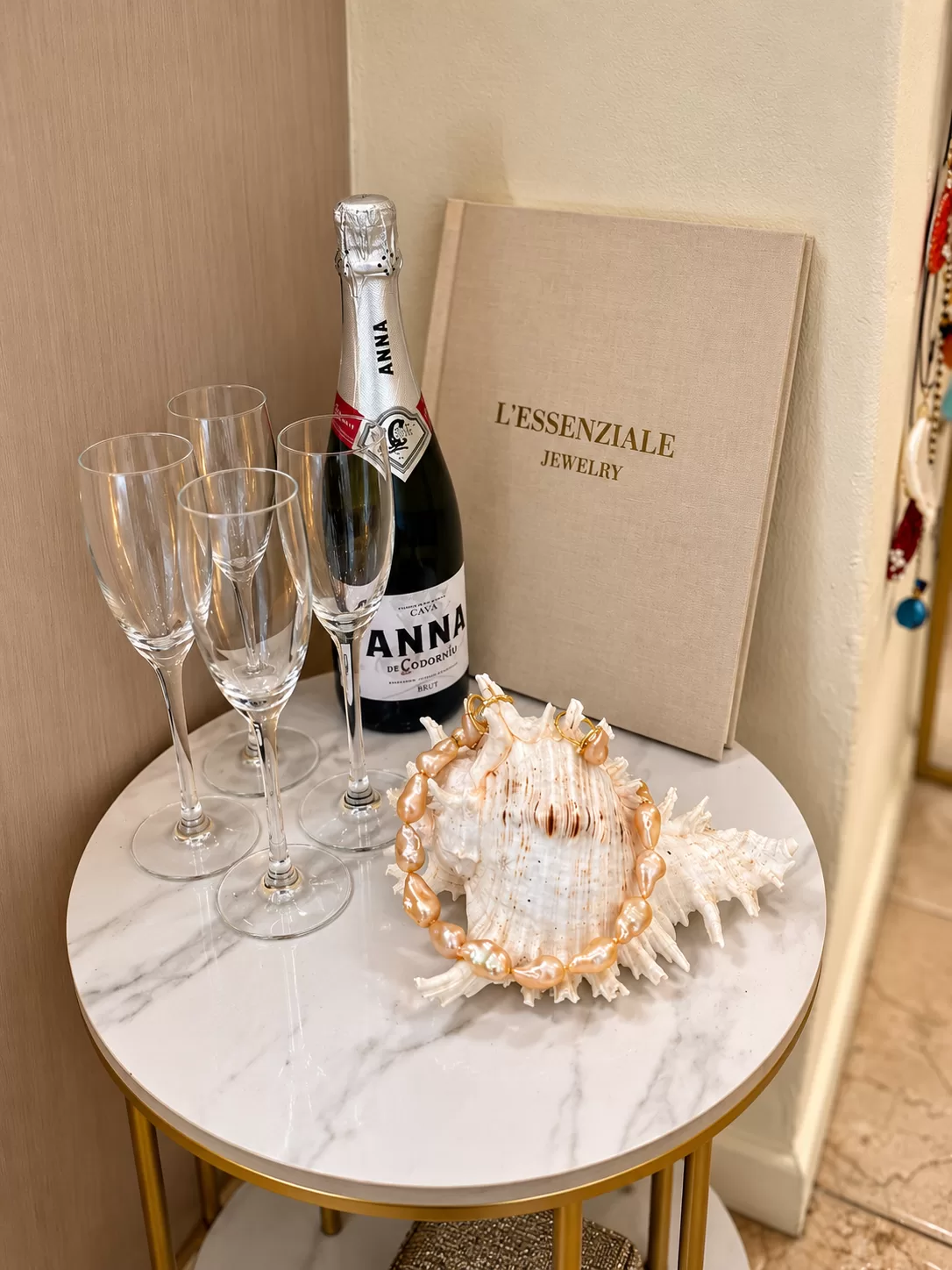
This year, we introduced another small detail that has worked particularly well for us: offering champagne to customers. I don’t offer it immediately when someone enters. Usually, I wait until they’re already interested in a piece and have started trying jewelry on.
Then I might say:
“While you’re browsing, would you like a glass of champagne?”
It’s a small gesture, but it changes the atmosphere. Customers relax, take their time, and enjoy the experience. Interestingly, in my experience this year, every customer who accepted our champagne offer also made a purchase. Of course, that doesn’t prove champagne caused the sale. Customers who accept may already be more interested in buying. Nevertheless, I believe hospitality can contribute to a more memorable shopping experience. And that’s ultimately what we’re trying to create. Not simply a transaction, but a pleasant moment that customers associate with our boutique.
10. Jewelry Expertise Builds Trust
If you’re selling jewelry, you need to understand what you’re selling. You should know the names of the gemstones, where they come from, and what makes them interesting.
You should understand the differences between freshwater and saltwater pearls, various gemstone qualities, and jewelry materials such as gold-plated silver, gold vermeil, and solid gold. You don’t need to give customers a long lecture. In fact, I generally prefer to explain a piece in just two or three interesting sentences.
But those sentences should demonstrate genuine knowledge. Perhaps you mention where a particular gemstone is found, explain an unusual characteristic, or describe how a necklace was made. These small details help customers understand the value of the jewelry.
‘More importantly, they build trust.
Let Customers See the Craftsmanship
At L’Essenziale, customers can see my small jewelry-making workstation. Sometimes they watch me adjust a necklace, change a clasp, or work on a piece. They can speak directly with the designer and owner.I believe this creates a completely different experience from simply purchasing a finished product. Customers can see that the jewelry isn’t just another anonymous item purchased from a wholesaler. There’s a person behind it, with knowledge, skills, and a personal connection to the designs.
Train Your Employees Properly
Of course, you won’t always be able to work in the boutique yourself. That’s why employee training is so important. Anyone selling jewelry should understand the products. They should know the difference between gold vermeil and ordinary gold plating, recognize the gemstones and pearls in your collection, and be able to explain how the jewelry is made. Customers should receive knowledgeable, confident service whether they’re speaking to the owner or an employee. You don’t need every salesperson to become a gemologist. But they should know enough to answer common questions accurately and recognize when a question requires specialist advice.
11. Should You Offer Discounts in a Jewelry Boutique?
There’s a common belief that luxury boutiques should never offer discounts.
I don’t entirely agree. Of course, you shouldn’t immediately reduce your prices whenever someone hesitates. And I wouldn’t recommend building a business around constant promotions. But sometimes a small gesture can make a customer feel genuinely appreciated.
Don’t Offer a Discount Before Someone Asks
If a customer seems hesitant about the price, I don’t automatically offer a discount. Instead, I give them time to consider the piece and answer any questions they may have. However, if someone asks directly whether I can offer a better price, I try not to reject the request immediately. In the beginning, I used to say something like: “No, sorry, we don’t offer discounts.” But over time, I realized that this response can make customers feel rejected. Sometimes people aren’t expecting a substantial reduction. They simply want to feel that you’ve listened to them and made a small personal gesture.
A Small Gesture Can Make a Big Difference
Now, when someone asks for a discount, I usually respond: “Of course, let me see what I can do for you.” I explain that our jewelry is handmade and that we work with quality materials, so we need to maintain prices that reflect those costs. But when possible, I’m happy to offer a small reduction, often around 5%.
Sometimes I simply round down the final price. For example, a customer spending €1,000 might appreciate a €10 gesture, even though the discount is relatively small. It’s not necessarily about the amount saved. It’s about feeling appreciated. I account for the possibility of occasional small discounts when planning our pricing, while ensuring that our regular prices remain fair and sustainable.
My advice is to protect the value of your jewelry, but don’t underestimate the importance of making customers feel special.
12. Build a Strong Online Presence — Even If You Only Sell in a Physical Store
If you’re opening a jewelry boutique in 2026, having a beautiful physical location is no longer enough. Your customers are also discovering businesses online. And sometimes their journey begins long before they walk through your door. At L’Essenziale, we’ve welcomed customers who discovered our boutique through Google, Instagram, TikTok, and other online channels. Some visitors specifically come looking for us because they’ve already seen our jewelry online. That’s why I believe building a strong digital presence should be part of your business strategy from the beginning.
Create and Optimize Your Google Business Profile
One of the most important things you can do is create a Google Business Profile. Make sure your address, opening hours, photographs, and business information are accurate. Upload beautiful images of your boutique and products. And encourage satisfied customers to leave genuine reviews. Over time, positive reviews can help potential visitors feel more confident about choosing your boutique. They also provide useful information about what customers appreciate most.
Don’t Ignore TripAdvisor and Local Directories
Depending on your location, platforms such as TripAdvisor can also help travelers discover your boutique. I would recommend listing your business in relevant local directories, shopping guides, and tourism resources. Look for opportunities to appear in articles about your destination, independent shopping, and local designers. For example, a jewelry boutique in Marbella could benefit from being featured in a guide to shopping in Marbella’s Old Town. These mentions can introduce your business to potential customers who might never have discovered it otherwise.
Use Instagram and TikTok
Social media has also become an important part of our marketing. We use Instagram to showcase our jewelry, share new collections, and communicate our brand’s visual identity. TikTok has helped us reach new audiences, and we’ve had customers visit the boutique after discovering us through TikTok promotions. I wouldn’t rely on only one platform. Different customers discover businesses in different ways.
Think About AI Search, Too
Another development worth paying attention to is the growing use of AI assistants to discover products, businesses, and travel recommendations. Customers increasingly use tools such as ChatGPT to research destinations, compare products, and find shopping ideas. You cannot guarantee that an AI assistant will recommend your boutique.
However, having a clear website, accurate business information, useful original content, and consistent mentions across reputable sources can make your business easier to discover and understand. At L’Essenziale, we also publish articles on our website, sharing information about gemstones, jewelry, and our collections.
I believe useful editorial content can support your brand’s visibility while giving potential customers more reasons to trust your expertise.
Build Your Reputation Beyond Your Own Website
Finally, don’t underestimate the value of publicity. Look for opportunities to be featured in magazines, local publications, travel guides, and relevant blogs. Build relationships with journalists, editors, and local businesses. A mention in a respected publication can introduce your boutique to a completely new audience. And unlike a short-lived advertisement, a useful article about your business may remain discoverable for years. The important thing is to pursue genuine editorial exposure rather than paying simply to manipulate search rankings.
Final Thoughts: What Really Makes a Jewelry Boutique Successful?
Looking back at the journey of opening L’Essenziale Jewelry in 2019, I realize that success didn’t come from one particular decision.
It was the combination of many things. Choosing a location where our target customers were likely to shop. Investing in a beautiful interior that made the boutique feel special. Starting with a relatively modest inventory and expanding it gradually. Learning how to make jewelry myself. Finding suppliers that offered attractive products at sustainable prices. Understanding how to balance different markups. Creating a relaxed, personal shopping experience. And continually working to make the boutique more visible, both online and offline.
We didn’t start with an enormous inventory or a perfectly established brand. We learned along the way.
Some decisions worked beautifully. Others, like our unsuccessful second retail location, taught us expensive but valuable lessons.
If I were opening another jewelry boutique today, I would approach the process with much more knowledge. But I would still follow the same fundamental philosophy.
Create a beautiful space, offer jewelry you genuinely believe in, understand your customers, manage your money carefully, and make every visitor feel welcome.
Because ultimately, a successful jewelry boutique doesn’t simply sell jewelry. It sells beauty, craftsmanship, emotion, and an experience that customers want to remember.
About the author: The founder of L’Essenziale Jewelry, an independent designer jewelry boutique established in Marbella, Spain, in 2019. Drawing on a background in interior design and years of experience in retail, she creates handmade gemstone and pearl jewelry and shares practical insights into building an independent creative business.
Discover the boutique and its collections at L’Essenziale Jewelry.